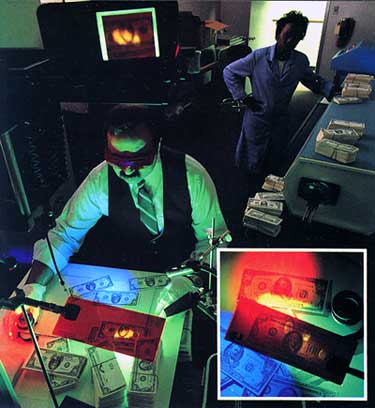
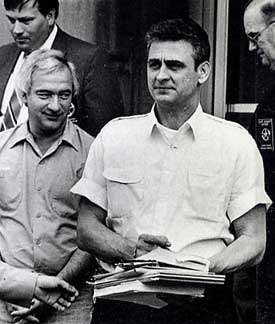
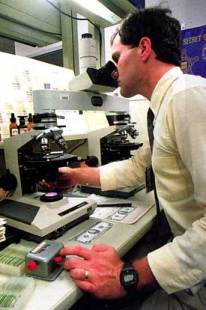
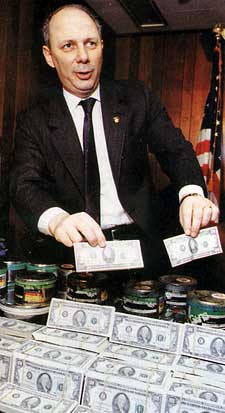
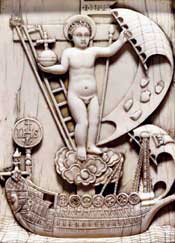
<?xml version="1.0" encoding="UTF-8"?>
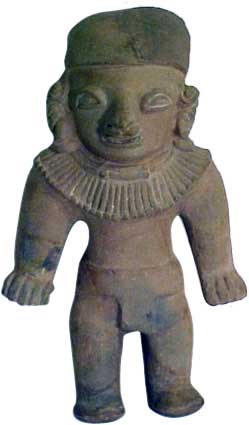
<!--Generated by Squarespace Site Server v5.0.0 (http://www.squarespace.com/) on Wed, 19 Nov 2008 23:30:53 GMT--><rdf:RDF xmlns:rdf="http://www.w3.org/1999/02/22-rdf-syntax-ns#" xmlns:rss="http://purl.org/rss/1.0/" xmlns:dc="http://purl.org/dc/elements/1.1/" xmlns:sy="http://purl.org/rss/1.0/modules/syndication/" xmlns:admin="http://webns.net/mvcb/" xmlns:content="http://purl.org/rss/1.0/modules/content/" xmlns:cc="http://web.resource.org/cc/"><rss:channel rdf:about="http://www.stephenbrookes.com/features-index/"><rss:title>features</rss:title><rss:link>http://www.stephenbrookes.com/features-index/</rss:link><rss:description></rss:description><dc:language>en-US</dc:language><dc:date>2008-11-19T23:30:53Z</dc:date><admin:generatorAgent rdf:resource="http://www.squarespace.com/">Squarespace Site Server v5.0.0 (http://www.squarespace.com/)</admin:generatorAgent><rss:items><rdf:Seq><rdf:li rdf:resource="http://www.stephenbrookes.com/features-index/2008/1/20/long-days-on-the-fake-money-trail.html"/><rdf:li rdf:resource="http://www.stephenbrookes.com/features-index/2008/1/9/chinese-mafia-takes-vice-abroad.html"/><rdf:li rdf:resource="http://www.stephenbrookes.com/features-index/2007/6/23/at-the-sackler-portugals-haunted-empire.html"/><rdf:li rdf:resource="http://www.stephenbrookes.com/features-index/2006/11/28/from-africa-to-hong-kong-a-hidden-trail-of-illegal-ivory.html"/><rdf:li rdf:resource="http://www.stephenbrookes.com/features-index/2006/11/28/battling-the-tomb-raiders-of-latin-america.html"/><rdf:li rdf:resource="http://www.stephenbrookes.com/features-index/2006/11/21/crumbling-rangoon-debates-a-new-look.html"/><rdf:li rdf:resource="http://www.stephenbrookes.com/features-index/2006/11/20/in-mandalay-an-artist-keeps-vanishing-worlds-alive.html"/><rdf:li rdf:resource="http://www.stephenbrookes.com/features-index/2006/11/20/first-ascent-ozaki-summits-burmas-highest-peak.html"/><rdf:li rdf:resource="http://www.stephenbrookes.com/features-index/2006/10/19/photography-tim-halls-golden-faces.html"/><rdf:li rdf:resource="http://www.stephenbrookes.com/features-index/2006/6/9/saving-the-asian-elephant.html"/></rdf:Seq></rss:items></rss:channel><rss:item rdf:about="http://www.stephenbrookes.com/features-index/2008/1/20/long-days-on-the-fake-money-trail.html"><rss:title>Long Days on the Fake Money Trail</rss:title><rss:link>http://www.stephenbrookes.com/features-index/2008/1/20/long-days-on-the-fake-money-trail.html</rss:link><dc:creator>Stephen Brookes</dc:creator><dc:date>2008-01-20T02:05:49Z</dc:date><dc:subject></dc:subject><content:encoded><![CDATA[<p><i>By Stephen Brookes • Insight Magazine • November 27, 1989&nbsp;</i><br>___________________________________________________________________________________&nbsp;</p><p><span style="float: left; color: black; font-size: 85px; line-height: 45px; padding-top: 16px; padding-right: 7px; font-family: times,serif,georgia;"><b>W</b></span>hen city sanitation workers emptied a trash bin in the Bronx one July morning last year, they found more than gum wrappers, empty bottles and tossed-out junk mail. Mixed in with the usual urban debris was a sizable fortune: $18 million in crisp new bills, as fresh and clean as if they had just come off the printing press. In fact, as the garbage men soon discovered, they had. The bills had been jettisoned by an international counterfeiting ring that had been operating out of New York for months. The ring had become convinced that federal authorities were onto them.<br><br><span class="full-image-float-right"><img mce_real_src="http://www.stephenbrookes.com/storage/COUNTERFEIT_labW.jpg" alt="COUNTERFEIT_labW.jpg" src="http://www.stephenbrookes.com/storage/COUNTERFEIT_labW.jpg"><br>At the Secret Service Forensics Lab &nbsp; &nbsp; &nbsp; &nbsp; &nbsp; &nbsp; &nbsp;&nbsp;&nbsp;&nbsp;&nbsp;&nbsp;&nbsp;&nbsp;&nbsp;&nbsp;&nbsp;&nbsp;&nbsp;&nbsp;&nbsp;&nbsp;&nbsp;&nbsp;&nbsp;&nbsp;&nbsp;&nbsp;&nbsp;&nbsp;&nbsp;&nbsp;&nbsp;&nbsp;&nbsp;&nbsp;&nbsp;&nbsp;&nbsp;&nbsp;&nbsp;&nbsp;&nbsp;&nbsp;&nbsp;&nbsp;&nbsp;&nbsp;&nbsp;&nbsp;&nbsp; B. Cabe </span>By trying to get rid of the evidence, the counterfeiters put investigators onto a trail that led ultimately to the arrest of some 85 people around the country, including suspected ringleader Francisco Scocozza, a 55-year-old used car dealer from Uruguay. As millions in phony bills surfaced, the ring was revealed to be the biggest counterfeiting operation ever broken up by U.S. authorities.<br><br>"When we debriefed these people," says Richard Ward, head of the Secret Service's New York office, "it appeared they had printed about $100 million over about two years."<br><br>Counterfeiting has become a huge business, as the Scocozza case shows. The Secret Service, the federal agency charged with finding counterfeiters and shutting them down, seized $88 million in fake U.S. currency during fiscal 1989 and about $122 million the year before. That's a lot of bad paper, but it's only a fraction of the $1 billion or so that authorities estimate is printed every year in the United States. Add to that another $1 billion in greenbacks printed overseas.<br><br>The massive size and international scope of the newly uncovered operations have investigators worried. "There's been a huge increase," says agent Ward. "While they used to print $2 or $3 million a few years ago, now they're printing $30 or $40 million."<br><br>As recently as the mid-1980s, busting a $300,000 operation -- or "plant,” as the Secret Service calls it -- would have been a big deal. But the spectacular seizures that have become almost commonplace suggest that the counterfeit game is changing and that new players are getting involved. "The dramatic rise in amounts being seized signals to us that the money is going to be used in a significant, major enterprise," says agent Jane Vezeris in Washington. "And what comes to our minds is drugs.”<br><br>Evidence for a connection is mounting. A growing number of drug busts are leading to counterfeiting operations. Secret Service agents in Los Angeles, for example, arrested a 65-year-old Argentine named Nicolas C. Tano in September, following a two-week investigation by the Drug Enforcement Administration and local authorities. When they grabbed him, Tano was literally working the printing press for a substantial counterfeiting operation: Agents seized close to $1 million in fake tens and twenties, bills commonly used in drug deals.<br><br>And while no direct ties to drugs have been made in the huge Scocozza case in New York, "there was talk among the defendants that this money was part of drug deals, because of the vast amounts of money needed in these deals," says Ward.<br></p><div style="float: right; height: 6em; width: 250px; margin-top: 10px; margin-bottom: 10px; margin-left: 10px; font-family: arial,helvetica,georgia; font-size: 22px; line-height: 20px; color: black; text-align: right;"> ... with a<span style="color: darkred;"> printer, </span>a<span style="color: darkred;"> photographer,</span>and a<span style="color: darkred;"> </span><span style="color: darkred;">few people to handle distribution, </span>a counterfeiter can set up a <b>national network </b><span style="color: darkred;">quickly and cheaply ...</span> </div><p>Fake money appeals to big drug dealers for a number of reasons. Most of their business is in cash, so they can palm phony bills off on their suppliers and employees and pocket the difference. By purchasing large amounts of counterfeit at cut-rate prices (usually from 20 to 30 percent of face value, depending on quality) or setting up a plant in a safe haven and manufacturing their own cash, they can multiply their drug profits several times over.<br><br>Owning a money factory, in fact, is becoming de rigueur among the drug cartels. “A lot of this money is manufactured in South America, specifically Colombia, and we find it's tied hand in glove with the drug traffic in South Florida," says Jack E. Kippenberger, head of the Secret Service's Miami office. "Sometimes they'll try to rip each other off with it. And if one drug dealer pays the other with counterfeit money, what's the other guy going to do? Go to the police?"<br><br>Counterfeiting, of course, isn’t limited to drug dealers alone. While huge, long term rings like Scocozza's 85-man operation surface from time to time, most counterfeit operations are tiny by comparison and may exist only a short time. It is a relatively easy business to get into: With a skilled printer and a photographer, and a few people to handle distribution and protection, a counterfeiter can set up a national network producing millions of dollars quickly and cheaply.<br><br>A complete home operation with printing press, light table, inks and paper can be had for as little as $10,000, but even that kind of investment is not necessary. A substantial amount of counterfeiting is done by owners or employees of print shops, who can slip in after hours, run off a batch of cash and slip out with no one the wiser.<br><br>Counterfeiters run the gamut of sophistication, from the crudest -- who simply cut the comers off large-denomination bills and glue or tape them to $1 notes (known as ‘raising the notes’) -- to rare, no-expense-spared operators with full-fledged intaglio printing facilities.<br><br>To print money the way the government does would be a daunting task. The Bureau of Engraving and Printing in Washington uses 65 separate, automated steps to make the familiar greenback. All the plates are engraved by hand. A different person engraves each part, so that no individual knows how to engrave the entire bill. The notes are printed using secret formula inks and a complex combination of the intaglio and typographic processes.<br><br>But the average counterfeiter doesn’t bother with anything so elaborate.&nbsp; There is almost no one who actually engraves plates; most prefer to use a relatively simple photomechanical process, offset lithography. It begins by photographing a bill, front and back, on extremely fine-grain film, then touching up the full-size negatives to get a good quality Treasury seal (printed in green on the right side of the face of the note). Faking the seal is the trickiest part of the operation, since the counterfeiter has to ink out or filter away the black overprinting; that makes it almost impossible to get a clear, crisp seal.<br><br>Once the counterfeiter has a negative he is happy with, he exposes it onto a photosensitized aluminum plate, mixes up his inks and starts running off bills on an offset press. Once printed, the bills are cut to size and sometimes artificially aged by folding them, dipping them in tea or coffee, or even running them through a washing machine.<br><br><span style="float: left; color: black; font-size: 65px; line-height: 45px; padding-top: 7px; padding-right: 7px; font-family: times,serif,georgia;">A</span> key problem for counterfeiters is finding convincing paper, with the right color and distinctive feel. The paper that real money is printed on is 75 percent cotton and 25 percent linen, with blue and red synthetic threads embedded in it. Only one manufacturer, Crane &amp; Co. Inc. of Dalton, Mass, makes it, and it is illegal to make anything even close. The next best thing is 100 percent rag bond paper, but that’s expensive and attracts attention when purchased in large quantities. And high-quality paper is normally soaked with optical brighteners, giving it a white, unrealistic look.<br><br>One way around the paper problem, popular among European counterfeiters, is to bleach the ink off $1 bills, then reprint them as $20, $50 or $100 bills. Well-printed bills on authentic paper can be very difficult for even professionals to detect.<br><br><span class="full-image-float-left"><img mce_real_src="http://www.stephenbrookes.com/storage/COUNTERFEIT_mccoyW.jpg" src="http://www.stephenbrookes.com/storage/COUNTERFEIT_mccoyW.jpg" alt="COUNTERFEIT_mccoyW.jpg"><br>McCoy was nabbed on copying charges</span>New color copier technology has created opportunities for the casual counterfeiter. In July, John P. McCoy was convicted in South Carolina on charges that he made $800,000 in U.S. and Canadian currency on a Canon Color Laser Copier. While copier counterfeits account for less than 3 percent of what the Secret Service seizes, some in the agency worry that the numbers may go up. "We're seeing some excellent machine-made notes," says Peter Smoot, an agent in the forensics division. "But they're coming off machines that cost over $50,000. When the price comes down and they become more readily available, then we'll have a problem."<br><br>While most rings focus on currency, many will make anything they can get cash for: credit cards, traveler's checks, cashier's checks, even department store gift certificates. Traveler's checks are especially popular. Investigators seized more than $39 million in fake checks in Florida in October 1988, busting a multinational group of Israelis, Americans, Colombians and Cubans that had passed about $40,000 worth of the checks -- described as "very high quality" - in stores along the East Coast.<br><br>The profits from counterfeiting are high, but it is a risky business. There is a maximum fine of $5,000 or 15 years or both for each count of manufacturing and passing fake bills, even for the casual counterfeiter who runs off a few bills on a copier machine. "People shouldn't think that copying a couple of notes is just a lark," says Vezeris. "It's a felony, and traditionally the courts have been very tough in their sentencing of counterfeiters."<br><br>Despite the risks, new groups enter the field all the time. "When I first started in the mid-'60s, most of our investigations involved the Italian criminal groups," says Ward. "Today you don't see it. Now it's the new immigrant groups: the Dominicans, the Russian émigrés, the Colombians. The Dominicans are one of the big groups right now in counterfeiting. In the last five years we've had at least three or four plants that were Dominican, and we know that there are a couple of plants operating now. We can tell by the new notes coming in."<br><br>Counterfeiting is a problem outside the United States as well: Fake greenbacks marked at more than $125 million were seized overseas last year, and 34 percent of the fake bills seized in the United States last year were manufactured abroad. The U.S. dollar is still the currency of choice for foreign counterfeiters, partly because of the difficulty in duplicating the complicated color schemes that other countries use to defend their currencies, but also because it is the most widely used and widely recognized currency in the world.<br><br>Whole black market economies in many parts of the world, in fact, run on the dollar -- especially in South America, where the drug trade has spawned a thriving market for dollars. Most of the fake money stays in the black market, but some of it inevitably finds its way to the United States, sometimes brought in from Latin America along traditional drug smuggling routes. "At one time, as much as 25 percent of the money being passed in the United States was being manufactured in that region," says Ward.<br><br><span class="full-image-float-right"><img mce_real_src="http://www.stephenbrookes.com/storage/COUNTERFEIT_lab2W.jpg?__SQUARESPACE_CACHEVERSION=1200797618120" alt="COUNTERFEIT_lab2W.jpg" src="http://www.stephenbrookes.com/storage/COUNTERFEIT_lab2W.jpg?__SQUARESPACE_CACHEVERSION=1200797618120"><br>Checking fober content at the lab</span>Almost no country is immune to counterfeiters. Mexicans were warned earlier this year not to buy U.S. dollars from strangers, after federal police in Chihuahua state seized $11 million in fake money in February and arrested Newton Van Drunen, now serving time in prison in Ciudad Juarez on counterfeit charges. To the north, a major Canadian operation was shut down in August when Royal Canadian Mounted Police seized more than $1.95 million in fake U.S. $100 bills in Montreal.<br><br>A number of European countries have been emerging as sources of high-caliber counterfeiting as well. In April, Italian police seized $23 million in fake $100 bills said to be so good that they fooled FBI agents invited to examine them. A major ring was broken up in West Germany the same month, when authorities arrested a West German and his Israeli accomplice and seized $12 million in counterfeit U.S. currency and enough high quality currency paper to print some 200 million bills. Even the Soviet Union has a problem. According to Interior Ministry figures, 326 cases were uncovered from 1986 to 1988, involving more than 16,000 rubles and $233,000 in U.S. bills.<br><br>But Asia may be the world's counterfeit capital. Millions of fake dollars are said to be circulating in the Pacific region, much of it printed in Bangkok, Hong Kong, Malaysia and the Philippines. The $100 bill is widely faked, but other currencies, from the Philippine peso to the Indonesian rupiah, are also being made.<br><br>And the stuff is good. “As a rule, the counterfeits we're seeing come out of Asia are of high quality," says Al Joaquin, special agent in charge of the Secret Service's Honolulu office, which oversees Asian operations. “And the Asian rings aren't like the usual two- or three-man operations you see elsewhere. Usually there are several people involved who deal with the distribution and banking channels. They're much more organized than the run-of-the-mill counterfeiter here."<br><br>Investigators say that the Philippines is emerging as Asia's new counterfeiting hot spot. A major syndicate making Japanese yen and U. S. dollars in a Manila suburb was broken up in March, but the bust failed to make much of a dent in the flow of dollars coming out of the country. "The big problem we're encountering now is in the Philippines," says Joaquin. “A majority of the Asian counterfeits -- from Thailand, Indonesia and Malaysia, for example -- stay in the region. But a lot of the counterfeit money from Manila is being channeled back into the United States."<br><br><span style="float: left; color: black; font-size: 65px; line-height: 45px; padding-top: 7px; padding-right: 7px; font-family: times,serif,georgia;">E</span>ven certain governments are reputed to resort to counterfeiting to get hard currency. U.S. government sources are close-lipped about where, or even whether, the practice takes place. But in May 1988, Kim Chong Min, the president of a North Korean trade company, showed up in South Korea with a strange tale of deception and woe. Kim claimed that he had been sent by his government to Eastern Europe and Zaire to buy $500,000 in counterfeit U.S. dollars but that he had been swindled out of his government-provided funds. Rather than return to a firing squad in Pyongyang, he took a plane to South Korea and asked for asylum.<br><br>Radical political groups and terrorists sometimes get involved in counterfeiting as well. Occasionally, they are close to home. White supremacist David Ross Dorr pleaded guilty in March 1987 to counterfeiting conspiracy charges with the Ku Klux Klan in California in an apparent plot to finance a race war. Donal Moyna, believed to be an electronics expert for the outlawed Irish Republican Army, was arrested at New York's La Guardia Airport last February with almost $14,000 in fake money. Before deporting Moyna back to Ireland in June, investigators determined that the money came from an IRA counterfeiting operation busted up by U.S. and Irish authorities last year in Dublin.<br><br>Certain Middle Eastern countries are also thought to be sources of fake money, which then makes its way to radical groups. The government of Turkey reported in June that it had seized an undisclosed amount of counterfeit West German, American and Turkish currency that it claimed had been made in Syria and Lebanon, and then smuggled into Turkey by the separatist Kurdish Workers' Party to pay for staff and weapons.<br><br>While the Secret Service maintains offices in Rome, Paris, Bangkok and a number of other capitals around the world to fight counterfeiting, its main focus is on the home front. Its 1,950 agents, spread out over 65 field offices, use a variety of investigative techniques, from undercover sting operations to paid tipsters, in order to crack counterfeiting operations.<br><br><span class="full-image-float-right"><img mce_real_src="http://www.stephenbrookes.com/storage/COUNTRFEIT_wardW.jpg" src="http://www.stephenbrookes.com/storage/COUNTRFEIT_wardW.jpg" alt="COUNTRFEIT_wardW.jpg"><br>Ward's haul involved 85 arrests<br></span>Sometimes, they just get lucky: New York authorities seized more than $1 million in fake money two years ago, after police found two phony $50 bills on a man who jumped a subway fare gate. But a more reliable source of information is the tip-off from a printing supply house. One Salt Lake City company called the Secret Service last August to report a suspicious purchase of materials commonly used in counterfeiting. Shortly afterward agents arrested James M. Colvin, who later admitted printing up a batch of low-quality $100 bills. (Colvin told investigators that he decided to try his hand after seeing the 1985 movie "To Live and Die in L.A.," which centered on a pyromaniacal counterfeiter. Apparently he wasn’t the only one: "We've had as many as 20 cases where the people involved said they got the idea from that movie," says agent Vezeris.)<br><br>There are few giveaways for the really top-notch bills. Most counterfeiters rely on the fact that few people really look at their money, assuming that it is legitimate. "The thing with counterfeit," says Ward, "is that it really doesn't need to be that good to be successfully passed."<br><br>Bad paper is often detected only when a victim tries to deposit it in a bank, which is where a counterfeit may get its first careful screening. 'All of our tellers go through a rigorous training program on the detection of counterfeit money," says Boris E. Melnikoff, an officer of First Atlanta Bank in Georgia. "That's not to say that no [fake] money gets into or out of the system. It's not utopia. Depending on the quality of the workmanship, it's possible that currency could go into the system and slip back out. But we keep the losses to a minimum."<br><br>When banks find fake bills they send them to the Secret Service's forensic division in Washington, where they are identified and compared with the collection of almost 15,000 different counterfeits on file to see if the bill is from a known batch or a new operation. Each fake bill's federal seal is studied and photographed, the ink is tested for composition and magnetic properties, the paper is examined, and the bills are checked for fingerprints. In some cases, the bills are put under an electron scanning microscope to check paper composition.<br><br>There have not been any changes to U.S. currency since 1963, when the words "In God We Trust" were added. But the Treasury Department has been talking for years about weaving a clear polyester thread into the paper that would make fakes made on copier machines easier to detect by leaving a black mark on the copies. Crane &amp; Co. patented a way to add the thread last year, and Treasury is expected to announce that it will start using the new paper and possibly make other design changes fairly soon.<br><br>More changes may be in the wind as well. Sen. John F Kerry, a Massachusetts Democrat, has introduced legislation that would require bar codes on new currency to make it easier to trace in counterfeiting and money laundering investigations.<br><br>No matter what changes are introduced, investigators predict that counterfeiters will always manage to find a way around them. And once caught, a counterfeiter can be difficult to keep locked up. William "Pops" Kems, 67, a longtime forger with three counterfeiting arrests under his belt, was arrested again last July in Indianapolis. A month later he walked away from the city's detention center by forging a hospital pass. He hasn't been seen since.<br><br></p>]]></content:encoded></rss:item><rss:item rdf:about="http://www.stephenbrookes.com/features-index/2008/1/9/chinese-mafia-takes-vice-abroad.html"><rss:title>Chinese Mafia Takes Vice Abroad</rss:title><rss:link>http://www.stephenbrookes.com/features-index/2008/1/9/chinese-mafia-takes-vice-abroad.html</rss:link><dc:creator>Stephen Brookes</dc:creator><dc:date>2008-01-09T14:41:20Z</dc:date><dc:subject></dc:subject><content:encoded><![CDATA[<p><em>By Stephen Brookes in New York and Washington, DC &bull; Insight Magazine &bull; April 24 ,1989</em></p><p>  <span style="float: left; color: black; font-size: 85px; line-height: 45px; padding-top: 16px; padding-right: 7px; font-family: times,serif,georgia;"><strong>O</strong></span>fficials said it was the biggest heroin bust in U.S. history. Following an intensive, 18-month investigation, federal and local authorities in New York decisively smashed an international Hong Kong-based drug ring in February, seizing 800 pounds of pure high-grade heroin and arresting 26 persons, including ringleader Fok Leung Woo. It was a dramatic bust, offering &quot;clear proof,&quot; as U.S. Attorney Andrew Maloney noted, that Chinese gangs have become the dominant smugglers of heroin into the United States.<br /><br /><span class="full-image-float-right"><img src="http://www.stephenbrookes.com/storage/triad_man350.jpg" alt="triad_man350.jpg" /></span>The problem, say Western law enforcement authorities, is already advanced: Chinese crime organizations have built up what the Justice Department recently called &quot;a sophisticated and intricate network world-wide that can facilitate any type of criminal endeavor - virtually anywhere.&quot;<br /><br />Those fears are focusing new attention on the murky subculture of the Hong Kong triads. Violent, quasi-mystical groups that are bound together with to-the-death loyalty vows and bloodletting rituals, the triads have pervaded Hong Kong's economic life for decades, running complex networks of legitimate and criminal businesses. The latter activities range from extortion, gambling, prostitution and drug smuggling to arson, contract murder, robbery and fraud.<br /><br />First emerging in the late 17th century with the aim of overthrowing the Manchu rulers of the Ching dynasty, the triads (they take their name from a mystical relationship thought to exist between man, earth and heaven) gradually degenerated into criminal societies with an elaborate code of rituals, vows and secret ceremonies. Fleeing China in 1949 after Mao Tse-tung's victory over the Kuomintang and the subsequent purge in which hundreds of triad members were executed, the remnants of the gangs reassembled in Taiwan and Hong Kong, where they prospered hugely.<br /><br />Members are reputed to hold prominent places throughout the economy, even at high levels of business and the legal profession. &quot;Joining a triad society is not only beneficial from an economic perspective, but also gives a kind of prestige,&quot; says Ko-Lin Chin, an investigator with the New York City Criminal Justice Agency who has studied triad society in depth. &ldquo;And you can establish a lot of good business connections by being a triad member.&quot;<br /><br /><br /></p><div style="float: right; height: 6em; width: 250px; margin-top: 10px; margin-bottom: 10px; margin-left: 10px; font-family: arial,helvetica,georgia; font-size: 22px; line-height: 20px; color: black; text-align: right;"> <span style="color: darkred;">... chinese crime organizations,&nbsp;</span> say police, have become&nbsp; so sophisticated they can operate <strong>virtually anywhere&nbsp;</strong> in the entire <span style="color: darkred;">world ...</span> </div><p>Nevertheless, Hong Kong has been stepping up its fight against the groups since 1983, drawing up anti racketeering legislation and wiping out much of the corruption that had plagued the police force for years. &ldquo;During the 1970s, a lot of police officers themselves were triad members,&rdquo; says Chin. &ldquo;It's very difficult to fight them if you have senior officials who are themselves triad members.&rdquo;<br /><br />The Hong Kong police deny that deals have been cut and say American fears that the triads are preparing for mass resettlement in the United States are, if not unjustified, at least unproved. &ldquo;While there's been an upsurge in Chinese crime abroad since about 1970, there is no evidence to support this cry of exodus,&rdquo; says Merritt.<br /><br />A growing number of U.S. officials believe that the transfer is well under way. &ldquo;Gang members that were active with triads in Hong Kong and Taiwan are being smuggled into the U.S. to continue to ply their trade in the streets of New York,&rdquo; Immigration and Naturalization Service Commissioner Alan C. Nelson told a House select committee studying the problem.<br /><br />The relationship between tongs and triads remains unclear. While no structural relationship between the American tongs and the Hong Kong triads seems to exist, tong members swear the same 36 oaths of loyalty that triad members do and bow to the god of triad societies. Moreover, says Chin, &ldquo;some tong members also belong to triads, so they may be spiritually related. Both follow the norms and values of the triad subculture.&rdquo; Clifford Wong, the elected leader of the Tung On tong, is a known member of the Sun Yee On triad in Hong Kong, says Goldman.<br /><br />  <span style="float: left; color: black; font-size: 65px; line-height: 45px; padding-top: 7px; padding-right: 7px; font-family: times,serif,georgia;">C</span>oncern about a triad exodus is not limited to the United States. A 1988 report on organized crime by Canada's Criminal Intelligence Service noted that triads have become one of the country's most dangerous organized crime groups. Based primarily in Vancouver and Toronto, where the main Asian communities are, the groups are said to be spreading to smaller cities like Calgary and Winnipeg. &quot;We've got about 17 different triad groups in Canada, with about 700 documented gang members,&rdquo; says Superintendent Douglas Egan of the Royal Canadian Mounted Police. &quot;We're sure there are links between these groups and others back in Hong Kong, as well as marriages of convenience between different organizations.&quot;<br /><br />&quot;Our number one national problem is drug trafficking,&quot; says Carmel Chow, one of six investigators from the Independent Commission Against Corruption in Hong Kong working for Australia's National Crime Authority. &quot;Triad members have been illegally migrating to Australia, and the problem is getting worse.&quot; He says 90 percent of the heroin being smuggled into Australia is handled by about nine groups affiliated with parent organizations in Hong Kong.<br /><br />The heroin that feeds that expansion, authorities say, will come from Asia. Opium crops in the so-called Golden Triangle, Southeast Asia's drug-producing center, are hitting unprecedented levels. </p><p><span class="full-image-float-left"><img alt="triad_whitemare.jpg" src="http://www.stephenbrookes.com/storage/triad_whitemare.jpg" /><br />Operation White Mare netted 800 pounds of pure heroin</span>&quot;In 1985, Asian heroin represented only about 14 percent of the U.S. market; now it's up around 40 or 42 percent,&quot; says Tobin. &quot;The last two years have seen record crops in the Golden Triangle, and the one coming out now is expected to be even higher.&quot; Production in Burma, the area's main opium producing country, has grown by as much as 50 percent since last year, with much of the new cultivation being run by the Burma Communist Party to fund its operations.<br /><br />But the Drug Enforcement Administration is not convinced that triads themselves are masterminding the drug trade. &quot;There are many, many triad members in the heroin business, but no evidence that a triad runs a heroin trafficking organization,&rdquo; says Tobin, who says that perhaps a dozen Asian drug kingpins are behind the smuggling rise. &quot;These people are criminals with a lot of money. They don't have any allegiance to some society -- they're all independents.&quot;&nbsp;&nbsp; &nbsp;</p><p>Nevertheless, given Hong Kong's virtually uncontested role as the world center of high-grade heroin smuggling and drug money laundering, triad involvement exists at almost all levels of the trade. The amount of the drug seized there has grown from 12.5 kilograms in 1985 to 161 kilos last year, and Hong Kong supports an addict population estimated to be about 40,000.&nbsp;&nbsp; &nbsp;</p><p>Part of the appeal to smugglers is Hong Kong's ready supply of light manufacturing facilities and cheap labor, which make it an ideal place to repackage the heroin in commercial shipments of manufactured products, which is how most of it enters the United States. </p><p>&quot;It might come into Hong Kong on a fishing trawler from Bangkok, then be repackaged in Hong Kong and sent in radios or ashtrays to Singapore, Seoul, any number of places, for transshipment,&quot; says Tobin.&nbsp; &quot;And if you look at the number of commodities coming into New York from Hong Kong, it's impossible to check.&rdquo;<br /><br /></p>]]></content:encoded></rss:item><rss:item rdf:about="http://www.stephenbrookes.com/features-index/2007/6/23/at-the-sackler-portugals-haunted-empire.html"><rss:title>At the Sackler: Portugal's Haunted Empire</rss:title><rss:link>http://www.stephenbrookes.com/features-index/2007/6/23/at-the-sackler-portugals-haunted-empire.html</rss:link><dc:creator>Stephen Brookes</dc:creator><dc:date>2007-06-23T20:10:24Z</dc:date><dc:subject></dc:subject><content:encoded><![CDATA[<p><strong>Sunday June 24, 2007</strong><br />____________________________________________________<br /><br /><a href="http://www.washingtonpost.com/wp-dyn/content/article/2007/06/22/AR2007062200377.html"><em><u>By Stephen Brookes &bull; The Washington Post 6/24/07</u></em></a></p><p><a href="http://www.washingtonpost.com/wp-dyn/content/article/2007/06/22/AR2007062200377.html"><em></em></a> <span class="full-image-float-left"><img alt="ships72.jpg" src="http://www.stephenbrookes.com/storage/ships72.jpg" /><br />&nbsp;&nbsp;&nbsp;&nbsp;&nbsp;&nbsp;&nbsp;&nbsp;&nbsp;&nbsp;&nbsp;&nbsp;&nbsp;&nbsp;&nbsp;&nbsp;&nbsp;&nbsp;&nbsp;&nbsp;&nbsp;&nbsp;&nbsp;&nbsp;&nbsp;&nbsp;&nbsp;&nbsp;&nbsp;&nbsp;&nbsp;&nbsp;&nbsp;&nbsp;&nbsp;&nbsp;&nbsp;&nbsp;&nbsp;&nbsp;&nbsp;&nbsp;&nbsp;&nbsp;&nbsp;&nbsp;&nbsp;&nbsp;&nbsp;&nbsp;&nbsp;&nbsp;&nbsp;&nbsp;&nbsp;&nbsp;&nbsp;&nbsp;&nbsp;&nbsp;&nbsp;&nbsp;&nbsp;&nbsp;&nbsp;&nbsp;&nbsp;&nbsp;&nbsp;&nbsp;&nbsp;&nbsp;&nbsp;&nbsp;&nbsp;&nbsp;&nbsp;&nbsp;&nbsp;&nbsp;&nbsp;&nbsp;&nbsp;&nbsp;&nbsp;&nbsp;&nbsp;&nbsp;&nbsp;&nbsp;&nbsp;&nbsp; &copy;National Maritime Museum, London</span><span style="float: left; color: black; font-size: 85px; line-height: 45px; padding-top: 12px; padding-right: 7px; font-family: times,serif,georgia;"><strong>T</strong></span>o look at Henricus Martellus's 1490 map of the world is to behold a strange, unsettling planet. Europe seems vaguely familiar, but beyond the Mediterranean everything dissolves wildly into myth. Africa is a squarish blob, connected to Asia by a long strip of land. A huge island called Taprobana dominates the Indian Ocean, and there's no hint of the Americas or the Pacific Ocean; the map simply stops at China. Half the world is a confused jumble, and the other half is not yet even imagined.<br /><br />But jump ahead a half-century to Pero Fernandes's map of 1545 -- and the planet is utterly transformed. A huge wave of exploration has brought the world into focus for the first time: Africa has taken on its distinctive shape, India is no longer an insignificant bump, the Pacific is there in all its vastness, and the Americas have appeared. Guesswork has given way to knowledge: A new world, with all its complexities and possibilities, has suddenly come into being.<br /><br />  </p><a href="http://www.washingtonpost.com/wp-dyn/content/article/2007/06/22/AR2007062200377.html"><em></em></a><div style="float: right; height: 6em; width: 200px; margin-top: 30px; margin-bottom: 25px; margin-left: 20px; font-family: arial,helvetica,georgia; font-size: 26px; line-height: 24px; color: black; text-align: right;">  ... &quot;the objects reflect <span style="color: darkred;">disturbing</span><strong> ambiguity</strong> more often than <span style="color: darkred;">cheerful</span><strong> multi-<br />culturalism&quot;</strong> ... </div><p style="text-align: justify;"> The two maps -- works of art in themselves -- are part of a massive new exhibit opening today at the Sackler Gallery. Called &quot;Encompassing the Globe: Portugal and the World in the 16th and 17th Centuries,&quot; it's a broad, impressionistic look at the trading empire built by the Portuguese that stretched from Brazil to Africa to Japan -- an empire that brought an explosion of knowledge to the Renaissance, fueled European expansionism and launched (for good or ill) the integration of the modern world.<br /><br />&quot;It's hard for us to imagine how transformatory this period was,&quot; says Julian Raby, the director of the Smithsonian's Sackler and Freer galleries. &quot;It's the first moment of globalization -- information about the variety of the world, in terms of its peoples and cultures, was just pouring in. And part of what we want to get across is that sense of wonder at the complexities and textures of the world.&quot;<br /><br />With roughly 275 objects on display, that shouldn't be a problem. &quot;Encompassing&quot; is the largest single exhibit in the Sackler's 20-year history -- taking up all its exhibition space and spilling over into the adjacent Museum of African Art -- and undoubtedly the most diverse. There are African ostrich eggs in ornate gold mounts, intricately carved crucifixes from Sri Lanka, a life-size oil painting of a Brazilian cannibal, Chinese astrolabes, Indonesian puppets, a Japanese shield covered in the skin of a ray, and a bewildering array of other wonders.<br /><br />Yet, despite its global scope and almost runaway eclecticism, the exhibit is more than just souvenirs from a sprawling empire. &quot;We looked for works of real aesthetic significance,&quot; says Jay Levenson, the show's guest curator, who scoured more than a hundred collections around the world to assemble the exhibit. &quot;Works that told the story of the voyages, but that also documented the interchange among cultures.&quot;<br /><br />  <span style="float: left; color: black; font-size: 65px; line-height: 45px; padding-top: 7px; padding-right: 7px; font-family: times,serif,georgia;">F</span>or all that it changed the world, Portugal's empire remains largely unknown in America, overshadowed by the Spanish voyages to the New World. But the explorations that started in 1419 under Prince Henry the Navigator (particularly Vasco da Gama's opening up of a sea route around Africa in 1498) were at least as important, laying the foundations of global maritime trade and establishing an empire that endured until modern times; the last outpost, Macau, was only handed over to China in 1999.<br /><br />But it was an unusual empire, designed not for conquest but for trade and, to a lesser degree, for spreading Christianity. The early voyages down the coast of Africa were aimed at breaking the Islamic world's monopoly on trade with the East, and forging an alliance with the mythical Prester John, a Christian king thought to rule somewhere in Africa. Using small, lightly armed flotillas of ships, the Portuguese established trading relationships rather than colonies. And as they ventured ever more deeply into Asia, they found themselves interacting not with the primitive world they'd expected but with complex, deeply embedded cultures and flourishing economies.<br /><br /><span class="full-image-float-left"><img src="http://www.stephenbrookes.com/storage/portigal_vasco.jpg" alt="portigal_vasco.jpg" /></span>&quot;It's much more about relationships between equals,&quot; says Levenson. &quot;It's about trade and the exchange of knowledge.&quot;<br /><br />Empire-building of any kind is rarely a pretty business, though. And in fact, the Portuguese weren't out to foster greater understanding among the peoples of the world -- they were after control of the trading routes, and they were ruthless. Slave trading was rampant, uncooperative ports were bombarded, and piracy abounded. In one memorable episode, da Gama himself locked nearly 400 Muslims onto a ship and burned them alive -- including women and children.<br /><br />&quot;Many of the artworks were gained at a very high price,&quot; says Raby, &quot;whether it was the death of indigenous peoples, through the diseases that were brought by Europeans, or by often quite violent encounters.&quot;<br /><br />And in a sense, that's part of what makes &quot;Encompassing&quot; such a fascinating exhibit: It puts objects on display that reflect disturbing ambiguity more often than cheerful multiculturalism. Each of the encounters was different, but the artworks that resulted rarely show a free hybridization of cultures; many, in fact, almost seethe with tension.<br /><br /><span class="full-image-float-right"><img src="http://www.stephenbrookes.com/storage/africanboat4.jpg" alt="africanboat4.jpg" /></span>Take, for example, a remarkable ivory saltcellar from 16th-century Nigeria. Probably made as a trade item for European collectors, it's a beautiful, intricately carved piece that shows a group of Portuguese sailors (who would have been involved in the slave trade) supporting a ship. The sailors' faces are carved almost like African masks, and the ship's captain holds an African spear in one hand. The effect is charming -- until you notice the small, wide-eyed face peering out from inside the ship, and the objet d'art suddenly takes on a disturbing edge.<br /><br />The complex relationships between the Portuguese and the cultures they encountered becomes even more apparent in the art from Asia, or &quot;Estado da India,&quot; as the network of Portuguese enclaves throughout the region came to be known. Most of the outposts were small trading centers, designed to manage the lucrative spice trade. But Lisbon also held substantial territories, including Bombay and Goa, and where the Portuguese held physical control, they held cultural and religious dominance as well -- driven in part by Jesuit missionaries seeking converts.<br /><br />&quot;Goa in the 16th century was a territory of some hundreds of square miles, with maybe a million people,&quot; says Sanjay Subrahmanyam, a professor at UCLA and author of <em>The Portuguese Empire in Asia, 1500-1700.</em> &quot;And there you're talking about forcible conversion, the destruction of Hindu temples, the elimination of the Muslim population.&quot;<br /><br />It wasn't all conversion by force, but even so, the degree of Christian influence is striking in the exhibit's Indian artworks. Many are stunning; a 17th-century communion table from Gujarat mixes European and Indian styles with effortless grace, and an elaborate ivory carving with Christ as a lute-strumming shepherd draws deeply on Indian sculptural traditions; at first glance it could be taken for a work of Buddhist art.<br /><br /><span class="full-image-float-left"><img src="http://www.stephenbrookes.com/storage/portugal_sailjesus.jpg" alt="portugal_sailjesus.jpg" /></span>But a far more revealing work may be the ivory plaque that depicts the infant Jesus sailing one of the Portuguese trading ships. It's called &quot;Young Christ as the Mariner on the Ship of Salvation,&quot; but the obvious ingratiation goes deeper than the title. The masterful Sri Lankan artist who carved it purged all traces of his culture from the work; it looks like something out of an Italian Renaissance workshop. As art, it's lovely. As an exercise in cultural self-abnegation, it's somewhat chilling.<br /><br />Other imperial tensions simmer throughout the exhibit, in remarkably different ways. In China, the Portuguese impact was so weak as to be almost undetectable; Beijing adopted Lisbon's superior astronomical knowledge but kept the rest at a studied distance.<br /><br />In Japan, however, things turned disastrous. There the Portuguese initially met with success, winning some 150,000 converts to Christianity. But it quickly became their undoing; the ruling shoguns outlawed the religion, expelling missionaries and forcing suspected Japanese Christians to stamp their feet on bronze plaques bearing the face of Jesus -- known as <em>fumi-e</em> -- to prove their indifference.<br /><br /><span class="full-image-float-right"><br />&nbsp;&nbsp;&nbsp;&nbsp;&nbsp;&nbsp;&nbsp;&nbsp;&nbsp;&nbsp;&nbsp;&nbsp; </span>It was only in Brazil, in fact (discovered virtually by accident by Pedro Alvares Cabral in 1500), that the Portuguese were able to build a large-scale colony as opposed to smaller outposts. Easily overcoming the indigenous Tupi people, Lisbon eventually set up huge sugar plantations, bringing hundreds of thousands of slaves over from Africa and, over the next few centuries, becoming the leader of the transatlantic slave trade.<br /><br />Although that disturbing side of the empire is touched on only lightly, several paintings of Africans and Tupi by the 17th-century Dutch painter Albert Eckhout offer a gripping insight. Scaled to heroic size, the paintings were commissioned as &quot;promotional literature&quot; to encourage investment in the plantations, says the Sackler's Raby -- designed to show Europeans how native peoples benefited from the civilizing aspects of colonization.<br /><br />And for all its multicultural aspirations, it's hard not to hear faint echoes of a similar spin in &quot;Encompassing the Globe.&quot; Ever since its discoveries were celebrated by Luís Vaz de Camoes in his epic 16th-century poem &quot;The Lusiads,&quot; Portugal's empire has been at the heart of its national identity, the rough edges softened and the myths massaged. Financed largely by Portugal's Ministry of Culture and dozens of Portuguese banks and corporations, &quot;Encompassing&quot; could be read as a paean to Portuguese imperialism, sheltering from hard questions in its own sheer vastness. But in the end, the artworks reveal a deeper and infinitely more satisfying story -- the tense, difficult and sometimes brutal birth of the modern world.</p>]]></content:encoded></rss:item><rss:item rdf:about="http://www.stephenbrookes.com/features-index/2006/11/28/from-africa-to-hong-kong-a-hidden-trail-of-illegal-ivory.html"><rss:title>From Africa to Hong Kong, a Hidden Trail of Illegal Ivory</rss:title><rss:link>http://www.stephenbrookes.com/features-index/2006/11/28/from-africa-to-hong-kong-a-hidden-trail-of-illegal-ivory.html</rss:link><dc:creator>Stephen Brookes</dc:creator><dc:date>2006-11-28T15:36:22Z</dc:date><dc:subject></dc:subject><content:encoded><![CDATA[<p><em>By Stephen Brookes in Nairobi<br />for Insight Magazine</em></p><p>  <span style="float: left; color: black; font-size: 85px; line-height: 45px; padding-top: 12px; padding-right: 7px; font-family: times,serif,georgia;"><strong>W</strong></span>hen delegates to the Convention on International Trade in Endangered Species (CITES) gathered in Lausanne, Switzerland, in October to debate the future of the African elephant, it was clear they were readying for an ugly fight. <br /><br /><span class="full-image-float-right"><img alt="elephantface2WEB.jpg" src="http://www.stephenbrookes.com/storage/elephantface2WEB.jpg?__SQUARESPACE_CACHEVERSION=1186400544557" /></span>In one camp, an alliance of Western conservationists and a majority of African countries was demanding that the elephant be granted endangered species status, a move that would stop legal trade in ivory and pull the plug on the illegal poaching that has halved Africa's herds in the past decade. In the other camp, a cozy cartel involving South Africa, Zimbabwe, Botswana and Japan was equally determined to see the profitable trade continue. Before the planes even hit the ground, the two sides had locked tusks.<br /><br />Banning trade was a wrongheaded policy, the southern Africans argued, because it robbed elephants of the very value that ensured their survival. Making them economically worthless merely meant that native populations, who compete with the elephants for land and who sometimes see them as pests, would not hesitate to kill them off. <br /><br />The &quot;elephanatics&quot; in East Africa should do what Zimbabwe and South Africa do, they advised: cull a percentage of their herds every year and sell the ivory, meat and hides on world markets. Since those profits could be plowed back into protection, conservation and rural development, the ivory trade actually protected the elephants and helped the economies of the countries that owned them.&nbsp; Besides, they said, outlawing legal trade would only push up the price of ivory on the black market making the poaching problem worse.<br /><br />But conservationists countered that continuing the limited trade would open a pipeline for poached ivory, allowing the smuggling networks that control the trade (and make most of the money from it) to thrive. Both Zimbabwe and South Africa have had abysmal records in policing well-known smuggling routes through both countries. And given the immense money to be made in smuggling, said many conservationists, it was unrealistic to think anything short of a total ban would work.<br /><br />After a week of acrimonious debate, the signatories voted to put the elephant on the list of endangered species and to end all international trade in ivory. Zimbabwe, Mozambique and Botswana took reservations from the decision, saying they would continue to trade. But in a turnaround that caught many by surprise Japan said it would respect the ban; and with the American and European markets effectively closed, the southern African countries will have a tough time finding buyers for their ivory.<br /><br />  <span style="float: left; color: black; font-size: 65px; line-height: 45px; padding-top: 7px; padding-right: 7px; font-family: times,serif,georgia;">T</span>he decision came at a time of precipitous decline in the number of African elephants. Due almost entirely to a rash of poaching to feed a thriving illegal ivory market, their numbers have dropped from 1.3 million 10 years ago to 630,000 today. As the price of ivory rose from $2.50 a pound in 1960 to $14 a pound in 1973 and as much as $170 a pound early this year, the elephant became a quick and easy source of income. The civil wars and instability in many African countries only threw fuel on the fire: As automatic weapons became commonplace from Somalia to Chad to Namibia, the rate of the slaughter reached 2,000 a week. <br /><br />Put an end to the ivory trade, conservationists warned, or the African elephant could become extinct in as little as 20 years. &quot;What we've seen in the past decade is one of the greatest mammalian holocausts in this century,&quot; says lain Douglas-Hamilton, a consultant to the World Wildlife Fund, who has studied the elephant in Africa for several decades.<br /><br />  </p><div style="float: right; height: 6em; width: 220px; margin-top: 35px; margin-bottom: 20px; margin-left: 20px; font-family: arial,helvetica,georgia; font-size: 25px; line-height: 23px; color: black; text-align: right;">  ... &quot;we've seen <span style="color: darkred;">one of the </span><strong>greatest mammalian holocausts</strong> of this<span style="color: darkred;"> century&quot; </span>... </div><p style="text-align: justify;"> Under pressure from people like Douglas-Hamilton, the world began to take notice. In 1986 the trade treaty group voted to move the elephant onto the list of threatened species&nbsp; -- one grade below endangered -- and drew up a system to ensure that only legally obtained, government-approved ivory would be traded in world markets. <br /><br />It was a good idea, but it quickly turned into a fiasco: Well-financed ivory traders soon figured out how to get around the restrictions, and the convention-sanctioned legal trade soon became little more than a front for a flourishing international business in cut-price, poached ivory.<br /><br />The 300 tons of ivory that left Africa legally last year amounted to only a tiny fraction of what ended up on world markets. By most accounts, some 80 percent of the ivory trade has been in poached tusks (Tanzania says it is closer to 94 percent), fueling a trade worth as much as $500 million a year. <br /><br />Little of that money ever returned to Africa; the profits stayed with powerful and secretive trading syndicates based in Hong Kong and Singapore &ndash; groups that ran elaborate operations stretching from Africa's wildlife reserves and hidden factories in Dubai to the traditional carving centers in Hong Kong and Japan.<br /><br />The illicit trade was able to spread because of deep flaws in the 1986 convention's controls, which tried to limit exports of raw tusks with a quota. To keep poached ivory off the market, all tusks were to be weighed, registered and marked, and their progress through the trading system tracked on a central computer. The convention's signatories agreed not to import tusks not properly certified under the new system.<br /><br />  <span style="float: left; color: black; font-size: 65px; line-height: 45px; padding-top: 7px; padding-right: 7px; font-family: times,serif,georgia;">B</span>ut the system proved to be fatally flawed. The key loophole was that the controls applied only to trade in raw, uncarved tusks. That meant that simply by smuggling the poached ivory into a non-signatory country and carving it into rough sculptures, a trader could slip it into the licit, convention-sanctioned trade. Once delivered to carving shops in Hong Kong, Japan or Taiwan, where it received elaborate carving from the experts, it was impossible to distinguish from legal ivory.<br /><br />Since 1986, that single flaw fueled a steady stream of poached tusks out of Africa and into rough-carving shops in the Middle East, Singapore, Taiwan and Macao. Until very recently, the favored carving haven was the Jebel Ali Free Trade Zone in the autonomous emirate of Dubai, one of the seven United Arab Emirates that stretch along 400 miles of the southern Persian Gulf. <br /><br /><span class="full-image-float-right"><img src="http://www.stephenbrookes.com/storage/dubai_carversWEB.jpg" alt="dubai_carversWEB.jpg" /><br />Workers at a carving factory in Dubai</span>Dubai, which had signed and later repudiated the convention agreement, until earlier this year played the role of a willing host to several major Hong Kong traders who set up large carving factories to get around the endangered species treaty's regulations. These factories ran from early in the morning until midnight every day, employing some 65 carvers from Hong Kong and a number of semiskilled carvers from the Asian subcontinent. According to reports from the area, they were closed down late last year, and Sheikh Qassim Sultan, the acting chairman of the Dubai City Council, announced in June that trade in ivory would henceforth be banned.<br /><br />But Dubai is only one of the United Arab Emirates, and trade is said to have continued unabated in the region. When the factories closed in Dubai, say investigators, equipment was moved to the neighboring emirate of Ajman; there are thought to be about a dozen factories there now.<br /><br />Two of the most notorious traders, the Hong Kong-based brothers Tat Hong Poon and Tat Wah &quot;George&quot; Poon, are believed to have dominated the illicit ivory trade for years. George Poon registered the ivory carving factories in Dubai, owns shares in the family-owned Fung Ivory Factory in Singapore (where investigators say much poached ivory has been shipped), has bought ivory from Kruger National Park in South Africa and is reported to have been to Tanzania to inspect poached ivory. Tat Hong Poon, according to the London-based Environmental Investigation Agency, imports and markets the ivory that his brother's activities provide. Both Poons refuse to speak to the press.<br /><br />The traders were able to take advantage of other flaws in the system created by the Convention on International Trade in Endangered Species. A key problem had been that each country was free to set whatever quota it felt like setting, according to any criteria it chose. That opened up the system to wide abuse: A country willing to play along with the big money smugglers would simply allot itself a massive quota and sell the certification to anyone with ready cash.<br /><br />A third flaw allowed countries to have any ivory seized from poachers certified by the convention and enter the legal trade, meaning that a lot of the so-called legal ivory in circulation came from poached elephants. The pact also allowed a country, once it had joined the system, to have its illegal stocks certified, a move that had the same effect. That flaw enabled Hong Kong money men to quickly tighten their grip on the trade. <br /><br />  <span style="float: left; color: black; font-size: 65px; line-height: 45px; padding-top: 7px; padding-right: 7px; font-family: times,serif,georgia;">T</span>he turning point came in 1986, when the convention Secretariat gave a complete &quot;amnesty&quot; to 89 tons of ivory in Burundi and 270 tons in Singapore in exchange for a promise that both countries would join the convention. The ivory in question had all been poached; Burundi, which for several years had a population of exactly one elephant, was Africa's largest exporter of ivory in the mid-1980s, sending out up to 100 tons a year smuggled from Zaire, the Central African Republic, Uganda and elsewhere.<br /><br />The decision to certify the Burundi and Singapore ivory meant that the endangered species trading system &quot;never really had a hope of working,&quot; says David Currey, associate director of the Environmental Investigation Agency. <br /><br />&quot;They gave a present of millions of dollars and a large number of permits to people who, by their ownership of the ivory, were obviously implicated in the illegal trade.&quot;<br /><br />Since legal, certified ivory sells for as much as five times the price of poached ivory, the owners made huge profits overnight. With that ivory in their control, says Currey, &quot;they could control the whole ivory trade in the Far East. They could push the price up by withholding it, and it meant that any trader who went to Africa to legally buy ivory just couldn't compete.&quot;<br /><br /><span class="full-image-float-left"><img src="http://www.stephenbrookes.com/storage/lwbbfz.jpg" alt="lwbbfz.jpg" /></span>The traders could also use their profits to set up more carving centers in Dubai and Taiwan. </p><p>&quot;One trader in Hong Kong recently told me that after the 1986 amnesty he couldn't go to any legitimate place to buy ivory,&quot; says Currey. &quot;By the time he'd carved it, it would just be too expensive to compete on the market, so he either had to close his business down or buy semi-finished products from Dubai, where they were sold for about 20 percent of the legal ivory price. So he was forced, if you will, into going along with the new system set up after 1986, where the illegal traders were ruling the whole thing.&quot;<br /><br />While the Hong Kong traders were very heavily involved in most of the illegal trade, they enjoyed discreet but substantial support from Japan, says Currey. <br /><br />&quot;Some Japanese traders have put up the money to Hong Kong traders who use that as capital to order ivory, whether it's to feed into the factories in the Middle East or to feed into factories in Macao or Taiwan or Singapore. They've been dealing with a number of Hong Kong companies for most of their ivory, and those companies, almost without exception, are the same ones who have been running the illegal trade. Some of the Hong Kong traders are starting to speak out, saying that Japanese traders were putting 20 percent of the money up front, placing orders for people like Poon to go and get ivory for them, no questions asked.&quot;<br /><br />While the high price of ivory fueled poaching, the proliferation of high-powered weaponry across Africa made it possible on a grand scale. Poachers in earlier decades had to rely on single-shot guns-or even spears to hunt elephants, but the poachers now have AK-47s, G-3s, even RPG-7 rocket launchers. <br /><br />&quot;It first became apparent that this was a real problem in 1982, when I was serving on the Uganda anti-poaching force,&quot; says Douglas-Hamilton. &quot;We were faced with a proliferation of automatic weapons after the civil war that had just taken place. When Amin's troops retreated from Uganda, they abandoned their guns or sold them to the local people, who began to poach. And it's the same in Somalia, where a lot of weapons were distributed at the beginning of the Ogaden war in 1977, and it's the same in southern Sudan, Angola, Mozambique. Wherever you get a war, you get loose weapons. And they get turned on elephants.&quot;<br /><br />  <span style="float: left; color: black; font-size: 65px; line-height: 45px; padding-top: 7px; padding-right: 7px; font-family: times,serif,georgia;">T</span>he path of destruction has been wide. Chad's herds have been slashed since civil war broke out in 1979; Uganda has only 1,500 to 2,000 elephants left from the 20,000 that roamed in the Sixties - most cut down by trigger-happy soldiers during Idi Amin's rein. <br /><br />In Angola, UNITA rebels have killed tens of thousands of elephants - as many as 100,000, by some estimates. (UNITA leader Jonas Savimbi told Paris Match last year that he had financed much of the 13-year war effort with teak and ivory sales; the South African Defense Forces confirmed last December that it had transported &quot;small quantities&quot; of ivory on behalf of the rebels for several years in the late Seventies.) <br /><br />A plane taking off from an Angolan rebel camp in late September crashed with the son of Portugal's president and a huge load of ivory on board. And in Mozambique, where the government has been fighting Renamo guerrillas since the mid-1970s, the elephant numbers have dropped from 55,000 to fewer than 17,000. More than 50 tons of ivory - the product of more than 5,000 elephants - was captured by government troops when they overran several Renamo bases.<br /><br />One country that has posed particular problems, especially for Kenya, has been Somalia. While it was one of the first countries to propose that the elephant be placed on the endangered species list, its record as a conservationist has been questionable. Although it currently has only about 4,500 elephants, Somalia has managed to export tusks from close to 14,000 since 1985.<br /><br /><span class="full-image-float-right"><img alt="elephant_dead.jpg" src="http://www.stephenbrookes.com/storage/elephant_dead.jpg?__SQUARESPACE_CACHEVERSION=1164739241342" /></span>Somalis have traditionally been poachers and hunters and can be found in large swaths of East Africa, even as far south as Kruger National Park. Known as <em>shifta</em>, they've had a reputation for banditry in eastern Kenya since the Sixties, and were responsible for the killing of the well-known conservationist George Adamson in Kenya. Almost all of the poachers captured or killed by Kenyan authorities in recent years have been well-armed Somali nationals, but authorities suspect that their numbers are not that large. <br /><br />&quot;It's hard to say how many are out there,&quot; says Richard Leakey, head of Kenya's Wildlife Service, &quot;but I don't think you're talking about more than 100 people throughout the country.&quot;<br /><br />The poachers, who travel in gangs of as few as three or as many as 60, are the bottom rung of the smuggling networks. They have to spend weeks in the bush and rarely make more than $5 a pound for the ivory. With shoot-to-kill policies in effect in Kenya, Tanzania and some other countries, they risk their lives every time they pick up a gun. &quot;The guy who gets the worst deal - after the elephant - is the poacher,&quot; says Leakey. &quot;He's the least paid, takes the greatest risks and has the hardest life.&quot;<br /><br />A typical operation will spend days stalking a herd, then move in for the kill. Once the elephants are downed, the tusks are removed as quickly as possible, often by hacking off the animal's entire face. The raw tusks are then moved on foot to the outskirts of the park and buried.<br /><br />Dug up later by the smugglers, they will be sent by truck or camel on one of several main smuggling routes; tusks from southern African countries often move down a well-established route that runs through Lusaka in Zambia, crossing into Botswana at the Kazungula border post, then into South Africa at Martinsdrift. From there the ivory goes to Johannesburg, where some is loaded onto planes and flown to Hong Kong, Taiwan or other points east, and the rest is sent on to the coastal towns of Durban, South Africa, or Maputo, Mozambique, to be loaded onto ships.<br /><br />The South African connection, investigators believe, is key to the illegal trade. A recent documentary by the South African Broadcasting Corp. noted that 50 tons of ivory was exported from South Africa last year, all of it properly documented and apparently legal. But, said the documentary, only 7 tons had been culled from the country's parks and another 7 tons brought in legally; fully 72 percent of the country's exports came from unexplained sources.<br /><br />There are other routes out of Africa as well. In the recent past, for example, large amounts of East African ivory were trucked overland into Burundi and shipped by air from Bujumbura to Dubai (often with the country of origin labeled as Tanzania). That route, while diminished, still exists. Another way has been to pack the ivory in sacks of grain or sugar and transport it overland through southern Sudan to Addis Ababa in Ethiopia. An even more common method, though, is to load the ivory onto small sailing vessels known as dhows in port cities such as Mombassa in Kenya or Dar es Salaam and Mtwara in Tanzania, and to ship it up to Dubai's Hamfiyyah Port.<br /><br />The sea routes are thought to be run by Middle Easterners, who will hire a dhow and give the captain instructions on where to pick up the tusks, as well as money to pay for the consignment. Even a couple dozen tusks can make a trip profitable, and a fair amount of the dhow traffic from East Africa to the Middle East is thought to participate. The trip is not terribly risky, and the rewards make it well worthwhile; around Mombassa it is said that if you want to know which dhows are running ivory, look for the ones that are freshly painted.<br /><br />The trade flows freely, oiled by money. Official corruption at almost every level is widespread, say investigators. Wildlife departments in most African countries operate on minimal budgets, and the rangers who patrol the reserves are poorly paid and badly under-equipped. As the price of ivory rose throughout the Seventies and Eighties, the price of a pair of tusks soon surpassed a ranger's yearly salary - and the temptation to poach became hard to resist.<br /><br />But corruption spreads above the level of the game warden and low-level customs official, who could be persuaded to turn a blind eye for a relatively small amount. <br /><br />&quot;Corruption at the highest levels of the governments of Zaire and Zambia has contributed to kills of as many as 200,000 elephants in Zaire and 100,000 in Zambia over the past decade,&quot; says Craig Van Note, executive vice president of the Monitor Consortium, a conservation group in Washington. &quot;Much of the ivory is flown out or shipped out without any documentation.&quot;<br /><br />The corruption spreads to government officials and even foreign diplomats. The Tanzanian court of appeals recently increased the sentence of a member of Parliament, Ali Aburi, who had been caught transporting 105 tusks in his official parliamentary vehicle, from nine years in prison to 12. And Hussein Joesoef, Indonesia's ambassador to Tanzania, was arrested with his wife in Dar es Salaam in January attempting to smuggle a container of 154 raw and 24 partly worked tusks onto a flight to Abu Dhabi and Singapore. <br /><br />No one, apparently, is immune from temptation: a Roman Catholic priest, the Rev. Fidelis Efio, is serving a five-year prison term in Tanzania for possession of 224 poached tusks.<br /><br />In many parts of Africa, the fight against poaching is being waged like a war. Namibia has been using members of its notorious Koevoet police unit (which gained a reputation for brutality in the 23-year war against the Namibian SWAPO guerrillas) to fight poaching in the Caprivi Strip; they are said to be using the same counterinsurgency techniques against poachers that they used to track guerrillas. And in Zimbabwe, former Rhodesian bush fighters have been fighting poachers in the Zambezi Valley.<br /><br />Any full reprieve for the African elephant will have to come from a combination of stepped-up anti-poaching measures, more money to African conservation efforts and an end to demand for ivory in the major markets of the United States, Europe and Japan. Of all of these, ending demand is the most important. &quot;It's people who will save the African elephant,&quot; says Kenyan wildlife official Leakey. &quot;Not little bits of paper signed in Switzerland.&quot;&nbsp; </p><p><em>(Insight Magazine, November 13, 1989)&nbsp;</em></p>]]></content:encoded></rss:item><rss:item rdf:about="http://www.stephenbrookes.com/features-index/2006/11/28/battling-the-tomb-raiders-of-latin-america.html"><rss:title>Battling the Tomb Raiders of Latin America</rss:title><rss:link>http://www.stephenbrookes.com/features-index/2006/11/28/battling-the-tomb-raiders-of-latin-america.html</rss:link><dc:creator>Stephen Brookes</dc:creator><dc:date>2006-11-28T02:17:30Z</dc:date><dc:subject></dc:subject><content:encoded><![CDATA[<p><em>By Stephen Brookes<br />for Insight Magazine</em><br /><br /><span class="full-image-float-right"><img src="http://www.stephenbrookes.com/storage/PCfigure2WEB.jpg" alt="PCfigure2WEB.jpg" /></span>

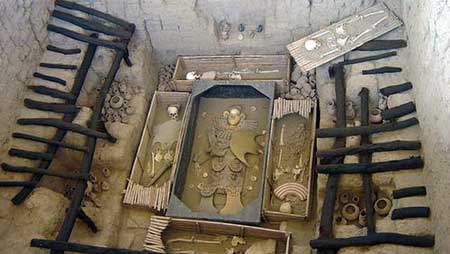
<span style="float:left;color:black;font-size:85px;line-height:45px;padding-top:12px;padding-right:7px; font-family: Times, serif, Georgia;"><b>A</b></span>cting on a tip from police last year, archaeologist Walter Alva was led to an ancient burial ground at Huaca Rajada in Peru's Sipan Valley, where excavations of a looted site revealed the tomb of a warrior priest about 1,500 years old. Inside were some of the most extraordinary artifacts yet found in the Western Hemisphere: beautifully crafted lapidary jewelry, a unique copper headdress and a figure made of turquoise and gold which may be the finest single piece of pre-Columbian jewelry ever found.<br /><br />&quot;There's never been an archaeological find to match the quantity and quality of gold dug up at Huaca Rajada,&quot; says Christopher B. Donnan, who worked with Alva at the site. &quot;It's phenomenal.&quot;<br /><br />While it&rsquo;s considered one of the great archaeological finds of the century, the tomb might never have been discovered had it not been for a police raid on a gang of looters &ndash; or <em>huaqueros</em>, as they are known &ndash; that left one of them dead. <br /><br />&quot;The police have always been aware that there were looters actively working the valley area. But it was only after they went into one of the looters' homes and found gold pieces that I was notified,&quot; said Alva, director of the Bruning Archaeological Museum in nearby Lambayeque.<br /><br />The find at Sipan has focused renewed attention on the growing problem of looting and the subsequent loss of the archaeological resources. It&rsquo;s also reopened the debate over ownership and protection of ancient artifacts, pitting the interests and rights of dealers and collectors against those of the scientists and governments. <br /><br />The issue is complex, with interlocking and sometimes murky questions of patrimony, ownership, protection and preservation, and any solution to the problem will be complex. But without determined action, say archaeologists, Latin America's heritage could be lost within a matter of years.<br /><br />The looting itself, whether by peasants digging up the odd pot or by well-organized and well-financed teams of professionals, is widespread around the world and has become particularly acute in Mexico, Guatemala, Belize, Honduras, Costa Rica, Bolivia, Ecuador, Peru and Chile. It&rsquo;s not a new problem -- archaeologists at the Maya Tikal site in Guatemala have found evidence of looting from 1,000 years ago -- but its pace has picked up rapidly since the early 1970s. <br /><br />&quot;The traffic in cultural goods grows every day,&quot; says Alberto Tamayo Barrios, head of the Patrimony Office of Peru's Foreign Ministry.<br /><br />Nevertheless, government officials are hard-pressed to stem the tide. With the pre-Columbian artifacts market so strong, they say, and the problems of policing the illegal traffic so extensive, looting and smuggling take place almost openly in many countries.<br /><br /><span class="full-image-float-left"><img alt="huacarajadaWEB.jpg" src="http://www.stephenbrookes.com/storage/huacarajadaWEB.jpg" /><br />Tomb at Huaca Rajada</span>As far as archaeologists are concerned, the looting represents destruction of an irreplaceable resource. As looters dig random tunnels and trenches into tombs, delicate objects are often smashed. The destruction is, in many cases, extensive. Poking into graves with long metal sticks, digging indiscriminately with pickaxes, sometimes even using dynamite, local looters destroy as much as they come away with. <br /><br />&quot;I shudder to think of all the things that just get stomped on,&quot; says George E. Stuart, an archaeologist with the National Geographic Society.<br /><br />

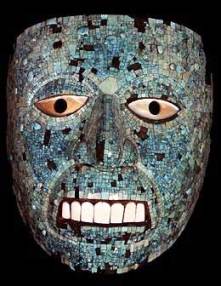
<span style="float:left;color:black;font-size:65px;line-height:45px;padding-top:7px;padding-right:7px;font-family: Times, serif, Georgia;">J</span>ust as important as the destruction of objects, however, is the loss of the context in which they are discovered. Those that are retrieved intact soon disappear into private collections in the United States, Japan and Europe without being cataloged or studied. Analysis of the exact location and arrangement of goods found in tombs and religious sites, especially in relation to skeletal remains and architectural elements, can yield important clues to their social, religious and demographic significance. But when artifacts are unearthed and sent abroad, the archaeological record is erased. <br /><br />&quot;When something enters a collection, it's already lost half its story,&quot; says Ian Graham, a Maya researcher at Harvard University's Peabody Museum.<br /><br />While the looting is undeniably fueled by the strong market in the United States and Europe, dealers and collectors are quick to deny charges that they are ultimately, if indirectly, responsible for the problem. None condones looting, yet most insist that the objects are better-treated and more carefully preserved in collections in the developed world than they would be in the countries of origin.<br /><br />&quot;When an American collector purchases Maya pottery, you can be very sure he takes good care of it,&quot; says Douglas C. Ewing, president of the American Association of Dealers in Ancient, Oriental and Primitive Art. &quot;And when it is seized by a Mexican authority and given to a museum, it is not taken care of.&quot;<br /><br /><span class="full-image-float-right"><img alt="PCmaskWEB.jpg" src="http://www.stephenbrookes.com/storage/PCmaskWEB.jpg?__SQUARESPACE_CACHEVERSION=1186196111780" /><br />Aztec mask</span>To a certain degree, that is true. A 1983 study by the United Nations Educational, Scientific and Cultural Organization found that Peru's museums were not adequately protecting many artifacts, exposing textiles, grave goods and preserved remains to the predations of insects, rodents, humidity and mold.<br /><br />Most U.S. museums provide better care than Latin American museums can afford, but &quot;the old excuse that other nations are not taking care of the things, therefore they should be given to American museums, is a red herring,&quot; says Robert Sharer, an archaeologist at the University of Pennsylvania. &quot;Objects in any collection are going to be subject to deterioration over time, and that's true in a private collection.&quot;<br /><br />Dealers also reject the argument that Latin American governments have a legitimate claim of patrimony over artifacts dating back many centuries. </p><p>&quot;The people in the seats of power in Mexico City have no ancestral pretensions to the Maya at all, and would be insulted by the suggestion,&quot; says Ewing. &quot;The predominant culture, which makes such a strong effort to reclaim Maya culture, at the same time tries to suppress the Maya themselves. And it's even worse in South America.&rdquo;<br /><br />

<span style="float:left;color:black;font-size:65px;line-height:45px;padding-top:7px;padding-right:7px;font-family: Times, serif, Georgia;">T</span>hat doesn&rsquo;t let collectors in the United States off the hook, archaeologists say. Latin American governments are sensitive to the issue, and charges that U.S. collectors are exploiting area poverty are deeply felt. &quot;I can assure you that the ill will we gain from collecting their artifacts is substantial,&quot; says David A. Freidel, a professor at Southern Methodist University.<br /><br />Much of the looting is done by local people, many of whom are continuing a tradition started by their fathers or grandfathers. Many of them live at a bare subsistence level, and digging up artifacts and selling them to tourists provides them an important, even irresistible, source of income. Even some archaeologists find it hard to blame them. &quot;If I were trying to feed a family and found something in a mound I could sell for three months' income, I'd go for it,&quot; admits one.<br /><br />A good deal of the tomb robbing, however, is done by professional or semiprofessional bands. operating with varying degrees of collusion from government officials. For example, at the Rio Azul site in Guatemala, discovered in 1984, archaeologists led by Richard Adams of the University of Texas at San Antonio found hundreds of trenches dug randomly into the sides of pyramid mounds, some of them almost 60 feet deep. &quot;To move that much earth,&quot; Adams estimated, &quot;there must have been 40 men at work for about eight months.&quot;<br /><br />Teams that size, says Charles Koczka, a former U.S. Customs agent who chased art smugglers for 14 years, are often organized by Latin American collectors who are digging primarily for their own collections but also to find pieces they can sell to U.S. or European collectors. Once a suitable object is uncovered, Koczka says, the collector would call a dealer in the United States, who would come down to inspect it.<br /><br /><span class="full-image-float-left"><img src="http://www.stephenbrookes.com/storage/PCfigureWEB.jpg" alt="PCfigureWEB.jpg" /></span>Some observers, such as Karl E. Meyer in his 1977 book, &quot;The Plundered Past,&quot; have suggested that U.S. collectors and dealers were directly involved in raids on sites. But others insist that that kind of involvement is long over. &quot;It's now probably 15 or more years since any Americans were actually involved in the field, because those people have graduated,&quot; says Harvard's Graham. &quot;They've become owners of galleries.&quot;<br /><br />Other archeologists, notably Freidel, have pointed to evidence of links between drug smugglers and tomb looters - a relationship that U.S. Customs agents agree is likely, though unproved. Freidel also insists there are &quot;excellent reasons to believe that insurgents in the Maya area are involved in the artifact trade to buy arms.&quot; </p><p>The best-documented example of that, he says, was the looting and burning of facilities at the Tikal project in Guatemala, where &quot;paramilitary troops came in, burned records and looted artifacts out of the museum.&quot;<br /><br />Such incidents are undoubtedly to be expected in areas of political instability, although Graham says some of the guerrilla bands are &quot;very idealistic, conservation-minded people&quot; who have prevented looting in some sites. Many observers worry more about corruption among government officials. &quot;Take a farmer who accidentally comes across a tomb and finds some things,&quot; says Kazak. &quot;If he takes it to the authorities, will it make its way eventually to the national museum? I just don't know.&quot;<br /><br />Sharer of the University of Pennsylvania shares similar concerns. &quot;We were involved in a program in the early 1970s in Guatemala,&quot; he says, &quot;and all the materials we found at this excavation - jade, artifacts, polychrome pottery - were turned over to the government.&rdquo; <br /><br />Those artifacts, however, never made it to the national museum. Stored in a government warehouse in the town, they were looted almost immediately. &ldquo;I'm convinced it was organized and financed from the outside,&quot; he says. &quot;The guard was probably paid to look the other way, and particular objects were stolen. It was a highly selective operation.&quot;<br /><br />

<span style="float:left;color:black;font-size:65px;line-height:45px;padding-top:7px;padding-right:7px;font-family: Times, serif, Georgia;">T</span>he problem of corruption appears to be widespread. &ldquo;What export does occur takes place with the full blessing of the government,&rdquo; says Ewing. &quot;Not the president, of course. But the local police and customs are the ones getting rich off this.&quot; Some archaeologists agree, guardedly. &quot;Some artifacts are so large that they must involve cooperation at some level in the officialdom, but we don't know what those levels might be,&rdquo; says Freidel.<br /><br />Low-level corruption aside, archaeologists agree that stopping international trade in artifacts depends on developing a body of effective international law, but so far, only a confusing patchwork of legislation has been implemented. <br /><br />&quot;The legal morass is incredible,&quot; says National Geographic's Stuart. &quot;You're dealing with the laws of several different countries and with international law, and with the laws of the United States as well as the costs of pursuing it:&rdquo;<br /><br />All Central American countries have legislation barring excavations without official permission, and some, like Peru, make the state the sole owner of whatever is found. Guatemala, Mexico and Peru also have agreements with the United States to aid in the recovery and return of stolen artifacts. Congress in 1972 prohibited the import of monumental sculpture, murals and certain other goods without a permit from the exporting country.<br /><br />The United States adopted implementing legislation in 1982 for the UNESCO Convention on the Means of Prohibiting and Preventing the Illicit Import, Export and Transfer of Ownership of Cultural Property. The broad international agreement is designed to allow free exchange in the legal market while blocking the sale of stolen artifacts. But under pressure from art dealers, a compromise was written into the U.S. legislation that says it will be enforced only if similar enforcement is undertaken in other art-importing countries. It has therefore only worked in extremely narrow cases, and then only for limited periods. Its effect on limiting artifact trade has been minimal, observers say.<br /><br />Any effective solution to the looting problem is going to involve a combination of legislation, effective enforcement. education and economic development in the exporting countries, archaeologists say. Among importing nations, cutting demand is considered key. &quot;It's sort of like Prohibition,&quot; says one archaeologist. &quot;If the demand is there, you can't really expect law enforcement to solve the problem.&rdquo;<br /><br />One of the most critical steps has already been taken: a crackdown by the Internal Revenue Service on collectors who buy artifacts as a tax dodge. </p><p>&quot;The tax deductions which people got for donating their pieces to museums were usually appraised in the most slipshod and crooked manner,&quot; says Graham, explaining that appraisers and dealers would connive to inflate the value of artifacts their customers planned to donate and use as deductions. One group, based in the Bahamas, invited investors to buy artifacts, own them on paper for a short time and then donate them for a tax break - all without ever seeing a single item. The practice was widespread until 1986, when Internal Revenue began to examine appraisals much more closely.<br /><br />Genuine collectors are becoming more sensitive to the problem of looting, say archaeologists, and dealers are becoming more wary about what they buy. But as the U.S. market becomes more restrictive, it is likely that the markets elsewhere will pick up the slack. <br /><br />&quot;The pre-Columbian business in this country has almost dried up,&quot; says Ewing. &quot;But it's absolutely booming in Europe.&rdquo; An effective international effort to restrict trade in artifacts seems necessary, but elusive.<br /><br />&quot;Just the scale -- the number of people digging, the money behind the looting far outweighs what archaeologists can raise for research, so it's kind of a losing battle,&quot; says Sharer. &quot;Unless something is done in the next generation, there's going to be nothing left to dig.&quot;<br /><br /></p>]]></content:encoded></rss:item><rss:item rdf:about="http://www.stephenbrookes.com/features-index/2006/11/21/crumbling-rangoon-debates-a-new-look.html"><rss:title>Crumbling Rangoon Debates a New Look</rss:title><rss:link>http://www.stephenbrookes.com/features-index/2006/11/21/crumbling-rangoon-debates-a-new-look.html</rss:link><dc:creator>Stephen Brookes</dc:creator><dc:date>2006-11-21T15:34:19Z</dc:date><dc:subject></dc:subject><content:encoded><![CDATA[<p><em>By Stephen Brookes in Rangoon, Burma for Asia Times<br />__________________________________________________________________________________</em><br /><br />  <span style="float: left; color: black; font-size: 85px; line-height: 45px; padding-top: 12px; padding-right: 7px; font-family: times,serif,georgia;"><strong>A</strong></span>bout a mile into town from the airport, Yangon's quiet, tree-lined Pyay Road suddenly shifts into full-scale urban sprawl. Traffic backs up at Eight Mile Junction in a throat-closing haze of pollution, and a ramshackle jumble of half-built towers blots out the sky.&nbsp; And there, stretched out proudly above the chaos, is a billboard depicting the future: a shining city of steel-and-glass skyscrapers spreading to the horizon.<br /><br />&quot;It's a horrifying vision,&quot; said one Yangon resident. &quot;We definitely don't want to become like that -- it would be <em>Bangkok!</em>&quot; <br /><br /><span class="full-image-float-right"><img alt="secretariatSQW.jpg" src="http://www.stephenbrookes.com/storage/secretariatSQW.jpg" /><br />The crumbling Secretariat, in Yangon</span>But Yangon's long isolation from the world is ending, and with it the placid pace of life that has marked most of the last three decades. As the country moves toward a market economy, Yangon (formerly known as Rangoon) is undergoing a rapid but helter-skelter renewal as old colonial-era buildings are torn down and modern new office and housing complexes sprout up in their place. <br /><br />To many observers, the city has reached a critical turning point. If it wants to keep its distinctive character, it must find ways to modernize without destroying the past -- and time is running out.<br /><br />The stakes, say architects and historians, are huge. &quot;This city was once the gem of the region, and it could be the most beautiful and most liveable city in Southeast Asia,&quot; said Alfred Birnbaum, a researcher with the Institute of Asian Architecture at the University of Tokyo, during a recent visit to Yangon.<br /><br />&quot;It's a golden opportunity simply because nothing had been done for so long,&quot; he said. &quot;So if planning is done in a very rational, controlled manner, you could attract an amazing number of businesses, tourists and residents. It could become a hub city for the entire region.&quot;<br /><br />  <span style="float: left; color: black; font-size: 65px; line-height: 45px; padding-top: 7px; padding-right: 7px; font-family: times,serif,georgia;">L</span>ong-term thinking is, theoretically, underway, as the Yangon City Development Committee (YCDC) develops a &quot;master plan&quot; which officials say should be ready in about a year. The plan is designed to cope with Yangon's rapid population growth and upgrade its outdated infrastructure, while avoiding the mistakes other cities have made in recent decades: overcrowding, pollution, chaotic growth and paralyzing traffic jams. &nbsp;<br /><br />&quot;We're trying to merge traditional civilization with modern thinking,&quot; said Lt. Cmdr. Tin Maung Myint, the chairman of YCDC's foreign relations and investment committee. &quot;We've passed through many eras, and these have to be considered in our modernization. And we also want to make Yangon into a 'Garden City'&quot;.<br /><br />The attempts to move simultaneously modernize and preserve began only recently. According to some experts, the process got off to a rocky start. </p><p>&quot;In 1994, the order went out that the 'shameful colonial eyesores' had to be cleaned up,&quot; said one long-term Yangon resident. &quot;The owners were typically given only about a month, and since they had no money to repair them, people just chipped off the decaying facades and put on a new coat of paint. The city hadn't quite realized that the old buildings should be preserved, that tourists would come to see them.&quot;<br /><br /><span class="full-image-float-right"><img alt="yangon_city.jpg" src="http://www.stephenbrookes.com/storage/yangon_city.jpg" /><br />Downtown Yangon&nbsp;&nbsp;&nbsp;&nbsp;&nbsp;&nbsp;&nbsp;&nbsp;&nbsp;&nbsp;&nbsp;&nbsp;&nbsp;&nbsp;&nbsp;&nbsp;&nbsp;&nbsp; </span>But by early this year, the YCDC changed course and moved quickly to label some 187 colonial and pre-colonial buildings as &quot;heritage assets&quot; that could not be altered or torn down. Most are in the downtown area, and range from the spectacular but abandoned-looking Secretariat -- the seat of the government -- to tiny historic houses and former schools.</p><p>Finding funding for the restoration, though, won't be easy. While the government is providing some funds, experts note that restoration is an expensive and laborious process that is often beyond the means of developing countries. As with Hanoi and other historic cities around the world, the international community can sometimes help. The Division of Cultural Heritage at UNESCO in Paris and the World Monument Fund in New York are two such groups.<br /><br />But foreign advisors need to be sensitive to domestic concerns, caution experts. &quot;International projects should involve a partnership by the aid country and the receiving country -- rather than foreign experts simply blowing in, summing up the situation without having had time to understand the local culture, and developing proposals which are out of line with local needs and aspirations&quot;, said Dr William Logan of Deakin University.<br /><br />  <span style="float: left; color: black; font-size: 65px; line-height: 45px; padding-top: 7px; padding-right: 7px; font-family: times,serif,georgia;">O</span>ther observers see a valuable source of funding in the private sector. &quot;I really see corporate sponsorship as the hope for the short term,&quot; said the University of Tokyo's Birnbaum. &quot;Corporations could locate offices in old buildings which have been restored. They could also sponsor a street or a neighborhood as a way of gaining face and exposure in the country and showing that they are making a positive contribution to the culture.&quot;<br /><br />That's already started to happen in Yangon, where Texaco, Tiger Beer and a handful of other companies have restored decaying old buildings to their former splendor. One of the most elegant is a colonial villa on Inya Road that was completely restored last year by Diethelm Travel, and now serves as its Yangon office and living quarters for managing director Maren Dannhorn.<br /><br />&quot;We wanted an architecturally distinctive building,&quot; said Dannhorn, noting that when Diethelm head Luzi Matzig found the two-story house early last year, it was virtually a wreck. &quot;When I got here in May,&quot; said Dannhorn, &quot;we took the house to pieces -- only the walls, the windows, the doors and the woodwork were left. We gutted everything, and entirely replaced the electricity and plumbing -- even the roof. We worked on it day and night for three months&quot;. &nbsp;<br /><br />The results are spectacular: the full flavor of the 1934 original has been kept, even down to the historically-accurate exposed wiring, while the building operates as a fully modern office, with computers on every desktop. Upstairs, the living quarters are spare but elegant, with a balcony overlooking the Shwedagon Pagoda. The cost of restoring a part of the city's heritage? A very reasonable US$55,000. <br /><br />While applauding the efforts to restore specific buildings, some experts note that a more subtle and difficult task still remains: maintaining the overall distinctive character of the city.<br /><br />&quot;It's good to preserve famous buildings, but many buildings that aren't particularly noteworthy should be considered in the context of the urban integrity,&quot; said Birnbaum. &quot;You have to think about not only individual buildings, but whole areas.&quot;<br /><br /><span class="full-image-float-right"><img alt="assk_house_450.jpg" src="http://www.stephenbrookes.com/storage/assk_house_450.jpg?__SQUARESPACE_CACHEVERSION=1199589173433" /><br />Aung San Suu Kyi's colonial-era villa in Yangon&nbsp; &nbsp; &nbsp; &nbsp; &nbsp; &nbsp; &nbsp; &nbsp; &nbsp; Stephen Brookes</span>And key to that, say observers, is maintaining height limitations. &quot;If you're going to create an image of a city, you don't want a piecemeal image -- you want an integral whole,&quot; said Birnbaum. &quot;And height is probably the primary factor creating a unified image. One you start poking holes in the skyline, the unified image is gone. If you build like Bangkok, where there is no height limitation and no zoning laws, then you get a mishmash.&quot;<br /><br />The YCDC's Tin Maung Myint agrees, noting that new buildings are restricted to 12 stories, and that all new construction has to be approved by the city. &quot;We want to preserve the light of the city,&quot; he said. &quot;We don't want to build a cement jungle.&quot;<br /><br />  <span style="float: left; color: black; font-size: 65px; line-height: 45px; padding-top: 7px; padding-right: 7px; font-family: times,serif,georgia;">M</span>oreover, city officials said that the vast open areas in and around Yangon mean that there's no urgent need to tear down the city's architectural heritage. The city has been expanded to 232 square miles, with a number of new townships created in the outlying districts. &quot;Previously, people were squeezing into Yangon,&quot; said Tin Maung Myint. &quot;Now we're trying to get rid of the huts and give people better land in the satellite towns, where they can have their own houses and their own land.&quot;<br /><br />That plan makes sense, said one foreign urban planning expert, and may help to alleviate Yangon's growing traffic congestion, as well -- as long as plans are made to improve public transportation. By relieving population pressure on the downtown area, the new townships also help reduce pollution, as well.<br /><br />One key issue, in fact, is the development of industrial zones outside the city, in order to remove polluting factors as far as possible from residential areas. In one part of the downtown area, for instance, commercial printers dump highly toxic chemicals into open drains, creating a potentially lethal health hazard.<br /><br />&quot;We can modernize without tearing down the old city, because we have a lot of open land,&quot; said Tin Mung Myint.<br /><br />There's also a great potential for improving city's physical beauty by removing the container warehouses along the river, say urban planners. A magnificent row of colonial-era buildings runs along along the north side of Strand Road, including the red brick Custom House, the pastel-green Myanma Port Authority, the ornate Myanmar Economic Bank, the stolid police headquarters with its three-story columns and, of course, the famous Strand Hotel. <br /><br /><span class="full-image-float-left"><img alt="birdseyeview_rangoon.jpg" src="http://www.stephenbrookes.com/storage/birdseyeview_rangoon.jpg?__SQUARESPACE_CACHEVERSION=1199589421612" /><br />Rangoon in the late 19th Century</span>But the their beauty is marred by an imposing brick wall of warehouses that completely blocks the city off from Yangon River and the view of Dalat on the opposite shore.<br /><br />&quot;I would move the port elsewhere and build a Bund, a walkway along the harbor -- it would be magnificent, and one of the most important things they could do,&quot; said one urban planner in Yangon. &quot;The port facilities are not that big, so if they are going to do it, now would be the time. And the city is much bigger now than it was when the port was built -- there's no need to have cargo dropped immediately into the city.&quot;<br /><br />City planners say they do plan to move all the container yards up the river to a new deep-water port being constructed at Thilawa, but there are no plans yet to replace Yangon port with a park.<br /><br />Opening up the southern edge of the city may become more urgent as more skyscrapers go up in the city center. Despite the ordinance limiting buildings to 12 stories, the city's skyline has been abruptly broken in the past year by several new hotels, including the Trader's Hotel and the Sofitel Hotel on either side of the landmark Sule Pagoda in the heart of town. Both run upwards of twenty stories, and the Sofitel casts an unfortunate afternoon shadow over the previously sunny park in front of the elegant old Supreme Court.<br /><br />Moreover, most of the new buildings going up in Yangon are architecturally undistinguished. One of the exceptions is the new Kandawgyi Palace Hotel, which architects cite as a good example of what the city should be striving for. &quot;Unlike the Sedona Hotel, the Kandawgyi fits into its lakeside site beautifully -- it actually improves the view of Royal Lake,&quot; said one.<br /><br /><span class="full-image-float-left"><img alt="kandawgyi.jpg" src="http://www.stephenbrookes.com/storage/kandawgyi.jpg?__SQUARESPACE_CACHEVERSION=1199589481442" /><br />Kandawgyi Palace Hotel</span>But much of the newer construction tends to be impersonal, say some critics. &quot;They want military corners on everything,&quot; said one planner. &quot;Take the new National Museum -- on one level, they are talking about preserving Myanmar tradition, but what is Myanmar about this building? There's nothing particularly distinctive about this building. It could be anywhere.&quot;<br /><br />Others note that there's a great opportunity now for the development of a distinctively Myanmar school of modern architecture, avoiding glazed glass buildings which reflect heat and consume huge amounts of energy.<br /><br />&quot;Around the world, wooden consumption in private houses is almost a thing of the past,&quot; noted Birnbaum. &quot;But here, you've got the wood -- and Myanmar could take the lead in combining the best of modern ferro-concrete construction with wood construction. Myanmar has a proud tradition of building with teak. It could really provide a shining example of how wood construction has a future.<br /><br />&quot;It would be good for the city to make a few prime examples of what can be done, so that people can see it and say, this is a joy to look at, and also clean and safe and efficient&quot;, he added. &quot;And at the same time you could bring in very traditional Myanmar elements which would be distinctive and say: 'We are not like Bangkok. We are not going to become the hell of Southeast Asia'.&quot;</p><p><em>(Asia Times, 1997)</em>&nbsp;&nbsp; <br /></p>]]></content:encoded></rss:item><rss:item rdf:about="http://www.stephenbrookes.com/features-index/2006/11/20/in-mandalay-an-artist-keeps-vanishing-worlds-alive.html"><rss:title>In Mandalay, An Artist Keeps Vanishing Worlds Alive</rss:title><rss:link>http://www.stephenbrookes.com/features-index/2006/11/20/in-mandalay-an-artist-keeps-vanishing-worlds-alive.html</rss:link><dc:creator>Stephen Brookes</dc:creator><dc:date>2006-11-20T20:29:30Z</dc:date><dc:subject></dc:subject><content:encoded><![CDATA[<p><em>By Stephen Brookes in Mandalay<br />for Asia Times</em></p><p>  <span style="float: left; color: black; font-size: 85px; line-height: 45px; padding-top: 12px; padding-right: 7px; font-family: times,serif,georgia;"><strong>O</strong></span>n a quiet street on the eastern edge of Mandalay, a world away from the city's chaotic commercial center, tapestry artist Sein Myint is creating a small, strange universe of his own. As his chalk moves quickly over the canvas, sacred dragons and winged elephants appear, dancing girls cavort in gardens, and celestial beings beam down benignly from the clouds. <br /><br /><span class="full-image-float-right"><img src="http://www.stephenbrookes.com/storage/kalaga_weaving1.jpg" alt="kalaga_weaving1.jpg" /><br />&nbsp;&nbsp;&nbsp;&nbsp;&nbsp;&nbsp;&nbsp;&nbsp;&nbsp;&nbsp;&nbsp;&nbsp;&nbsp;&nbsp;&nbsp;&nbsp;&nbsp;&nbsp;&nbsp;&nbsp;&nbsp;&nbsp;&nbsp;&nbsp;&nbsp;&nbsp;&nbsp;&nbsp;&nbsp;&nbsp;&nbsp;&nbsp;&nbsp;&nbsp;&nbsp;&nbsp;&nbsp;&nbsp;&nbsp;&nbsp;&nbsp;&nbsp;&nbsp;&nbsp;&nbsp;&nbsp;&nbsp;&nbsp;&nbsp;&nbsp;&nbsp;&nbsp;&nbsp;&nbsp;&nbsp;&nbsp;&nbsp;&nbsp;&nbsp;&nbsp;&nbsp;&nbsp;&nbsp; Tony Wright<br /></span>As he sketches, dozens of young women around him are busily working on several other large tapestries, sewing sequins onto velvet and untangling long coils of gold and silver thread, ready to complete his designs and bring them to life. For Sein Myint has emerged as the acknowledged master of an ancient and almost-vanished art -- the ornate, embroidered and uniquely Myanmar tapestries known as kalaga. <br /><br />&quot;Every one of these tapestries tells a story,&quot; said the 51-year-old artist, getting up from the two-meter stretch of cloth he's been drawing on. &quot;Some are from mythology, others are tales from the Ramayana,&quot; he added, referring to the Buddhist epic. &quot;We're trying to keep those traditions alive, but also modernize them.&quot; <br /><br />To a large extent, Sein Myint has been the central figure in reviving the dying art of the kalaga, also known as shwe gyi do -- &quot;golden thread sewing.&rdquo; His Mandalay workshop produces between 400 and 500 tapestries a year, which make their way to monasteries, museums and private collectors around the world. &quot;We don't make any of the commercial products,&quot; he said with a grimace, referring to the kalaga baseball caps and handbags sold in local souvenir shops. &quot;We're committed to making beautiful tapestries.&quot;<br /><br />The art of the kalaga was born in the mid-1700's during the reign of King Alaungpaya, when tailors began sewing gold coins onto rough-spun cotton cloth as decoration. Under Thai and European influences the techniques became more refined and intricate, and by the end of the 19th century kalaga artists -- working, like Sein Myint, in family workshops in Mandalay -- were importing materials from all over the world and expanding their palette of techniques. <br /><br />The tapestries were used initially as wall hangings in monasteries and palaces, but gradually moved into all areas of life -- to screen off rooms and cover doorways, decorate bullock carts, and even as coffin covers. (One especially elaborate one, reserved for royalty, can be seen in the National Museum in Yangon.) Marionettes -- another Myanmar traditional art -- were clothed in kalaga costumes, and their stage sets were tapestries as well. <br /><br />The kalagas continued to develop in complexity until World War Two, with padded figures and new materials being incorporated into the designs. But during Myanmar's socialist period from 1962 to 1988, when the country was virtually cut off from the outside world, the art nearly died. As the economy disintegrated, only a few workshops managed to survive. <br /><br /><span class="full-image-float-left"><img alt="kalaga_old.jpg" src="http://www.stephenbrookes.com/storage/kalaga_old.jpg" /><br />19th Century Kalaga</span>Sein Myint, meanwhile, had taken an interest in the art. Growing up in Mandalay, he showed signs of being a renegade even as a child. Paw Oo Thett, one of the country's foremost artists, was his uncle, and Sein Myint would copy the older man's paintings -- to the point where the young artist was finishing copies of his uncle's paintings even before Paw Oo Thett could complete the originals.<br /><br />And his life after that was equally aggressive. He continued to paint, producing increasingly abstract watercolors, but went into business to make a living. He's vague about exactly what he did, saying only that for fifteen years was &quot;successful in trading&quot;, but acquaintances claim he made his fortune in bootleg Mandalay Rum. &quot;His moonshine was more popular than the real thing,&quot; said one friend. But it may have been a rough business. &quot;You noticed that his left eye is glass?&quot; added the friend. &quot;He lost it in a fight, years ago.&quot; <br /><br />Sein Myint's successful &quot;trading&quot; allowed him to continue painting, and to start designing and producing the kalaga tapestries. During the 1980's his fame spread, and 1989, his stature as the country's premier kalaga artist was recognized when he was commissioned to make a huge, six-meter tapestry for the United Nations. Depicting Lokanat -- the Myanmar god of peace -- presiding over a landscape of pagodas, rice fields and forests of teak, it now hangs in the UN Security Council headquarters in New York. <br /><br />In fact, his reputation as an artist has spread internationally, with shows of his kalagas and watercolors in Switzerland, Japan, Sri Lanka and the United States. And many of his paintings are remarkably sophisticated, in a country with a weak painting tradition. Many are stylized Myanmar scenes, charming enough to be reproduced as Unicef greeting cards. But others show a furious intensity and a strong, adventurous approach to color and form; a few even look as if they might have been done by the abstract expressionists Franz Kline or Robert Motherwell.<br /><br />Aside from watching his famous uncle work, Sein Myint says he had no formal training in art at all. &quot;I'm like a village hunter, rather than a professional sniper&quot;, he said. &quot;A sniper is well-trained, and he knows how to hit the target. The village hunter has to rely on his heart -- but he can still shoot straight.&quot;<br /><br />There's another side to Sein Myint, as well: Over the past thirty years, he has assembled what many say is the finest private collection of Myanmar art and handicrafts in the country. Encompassing everything from 2,000-year-old pots to fading 19th-century tapestries to elegantly carved bows from the hills of the Shan States, the collection is a Mecca for connoisseurs of Myanmar culture.<br />&nbsp;<br />&quot;Everything here is related, in some way, to the tapestries,&quot; he said, guiding a visitor through the large, open rooms of his home, where elegant pieces of antique lacquerware sit side-by-side with beautifully grotesque sculptures of ogres. An old bellows with an elephant-head snout -- his most recent acquisition -- is displayed proudly on an intricately carved teak table.<br /><br />&quot;Look at this painting, for example,&quot; he said, nodding toward a family portrait of a young prince in the Mandalay Court, surrounded by several of his wives and servants. &quot;It was painted by Saya Chone in the late 19th century, and shows very clearly how the clothes were worn and what the patterns were. So I can be accurate in the way I portray the figures in the kalagas.&quot;<br /><br />And while most of the objects were collected in Myanmar, some of the best pieces had to be brought back from London, where British collectors took them during the colonial period. <br /><br />&quot;These were bought at Sotheby's a few years ago,&quot; he said, of a set of three highly detailed paintings on silk from the mid-19th century reign of King Mindon -- probably the only such paintings still in the country. The paintings show a &quot;skill competition&quot; among the royal elephants -- a glimpse into the long-vanished world of the Mandalay Court. <br /><br />Sein Myint plans to open his home as what he calls a &quot;salon&quot; in the near future, to allow visitors a chance to see Myanmar culture at its best. <br /><br />&quot;I'm not a millionaire -- I can only collect a few things,&quot; he said. &quot;But it's important that we keep these aspects of our culture here, and not let them be sold off to foreign collectors. Because now, the old traditions are being revived,&quot; he added. &quot;People can not only create now, but they can make a living at it. This is a big step forward for us.&quot;<br />    <br /></p>]]></content:encoded></rss:item><rss:item rdf:about="http://www.stephenbrookes.com/features-index/2006/11/20/first-ascent-ozaki-summits-burmas-highest-peak.html"><rss:title>First Ascent: Ozaki Summits Burma's Highest Peak</rss:title><rss:link>http://www.stephenbrookes.com/features-index/2006/11/20/first-ascent-ozaki-summits-burmas-highest-peak.html</rss:link><dc:creator>Stephen Brookes</dc:creator><dc:date>2006-11-20T18:41:18Z</dc:date><dc:subject></dc:subject><content:encoded><![CDATA[<p><em>By Stephen Brookes in Rangoon<br />for Asia Times</em></p><p>  <span style="float: left; color: black; font-size: 85px; line-height: 45px; padding-top: 12px; padding-right: 7px; font-family: times,serif,georgia;"><strong>J</strong></span>apanese alpinist Takashi Ozaki has conquered some of the highest and most challenging mountains in the Himalayas -- peaks like Kanchenjunga, Lhotse and Everest's forbidding North Face. His latest triumph was the first ascent of Myanmar's remote Hkakabo Razi -- which, at 5,881 meters, is considerably lower than the 8,000-meter peaks he usually aims for. </p><p>But Ozaki has only one thing to say about Hkakabo Razi: It was so hard, he never wants to do it again.<br /><br /><span class="full-image-float-right"><img alt="takashi_ozaki.jpg" src="http://www.stephenbrookes.com/storage/takashi_ozaki.jpg" /><br />Takashi Ozaki</span>&quot;We are always looking for the more difficult climb -- this is the spirit of alpinism,&quot; he said in an interview in Yangon after the climb, looking tired and wan. &quot;But we had to fight the weather constantly. I can say absolutely that Hkakabo Razi is one of the most difficult and dangerous mountains in the world. I was never scared before, like this time -- I wanted to always run away from this mountain.&quot;<br /><br />Like all first ascents, the conquest of Hkakabo Razi -- whose summit was reached by Ozaki and the Myanmar climber Niyma Gyaltsen on September 15 -- was never assured. One of the most significant unclimbed peaks in the world, it was off-limits for decades because of fighting between the government and separatist Kachin rebels. <br /><br />In fact, little was known about it even as recently as three years ago, when Ozaki and his French wife (and climbing partner) Frederique Gely-Ozaki first broached the subject. <br /><br />&quot;I was interested in migration patterns of elephants between India and Myanmar,&quot; said Gely-Ozaki, who has written widely on Asian wildlife. &quot;And when I talked with the Myanmar officials, the subject of Hkakabo Razi came up. They said they were signing a cease-fire with the rebels, and that it was time to open up the area.&quot;<br /><br /><span class="full-image-float-left"><img alt="hkakabo2_small.jpg" src="http://www.stephenbrookes.com/storage/hkakabo2_small.jpg" /><br />Hkakabo Razi</span>That led to a trip to Yangon, where it became clear that any expedition would be into one of the most remote areas of the world. </p><p>Set in a remote corner of Kachin state near the Chinese border, Hkakabo Razi had not been seen by outsiders in several decades. There weren't even any photographs of it -- at least, none that the Myanmar authorities were willing to release. <br /><br />&quot;It was a very mysterious mountain,&quot; said Ozaki.&nbsp; &quot;Fifty years ago, a British botanist came there, but didn't see the real Hkakabo Razi. Ten years later, another group tried to climb it, but it was too steep. This was the only information we had, and it was not enough.&quot;<br /><br />So January 1995, Ozaki set off on a three-month reconnaissance trek into Myanmar's mountainous far north, with a few dozen porters, a team from the Myanmar Hiking and Mountaineering Federation (MHMF) -- and his son Makato, who was ten years old at the time.<br /><br />&quot;We were trekking through tropical jungle, fifteen miles a day up and down, and the way was not good at all, very narrow and always hard,&quot; Ozaki said. &quot;But we had to see the mountain, to see which route we will take, what equipment we will need, how much rope.&quot; <br /><br />As they approached the mountain, however, heavy snows and the threat of avalanches intervened, making it impossible to set up a base camp for the climb. The weather was so bad that, after climbing a nearby mountain to examine Hkakabo Razi, the clouds never even cleared long enough for them to photograph it.<br /><br /><span class="full-image-float-right"><img src="http://www.stephenbrookes.com/storage/hkakabo5.jpg" alt="hkakabo5.jpg" /><br />The approach to Hkakabo Razi</span>The setback was discouraging, and Ozaki was starting to worry about the threat of being beaten. Two other expeditions -- one French, one Japanese -- had also been granted permission to make an assault on Hkakabo Razi. Under pressure, realizing he would have to improvise a route up the mountain if he were to beat the other teams, Ozaki returned to Yangon to put together a climb as quickly as he could. <br /><br />In Yangon, he worked feverishly with climbers from the Myanmar Hiking and Mountaineering Federation to put together a strong team, training them in alpine techniques. He had also gleaned some important information from the reconnaissance mission, and now knew the route in to base camp, how many provisions they would need and the difficulties they would face in finding porters to carry the massive amounts of gear and supplies. He also knew that his young son could handle the rigors of the trip. And that was important -- because when they set out again to make an attempt on the summit, Ozaki brought not Makoto, but also his wife and his seven-year-old daughter Sarah.&nbsp; &nbsp;<br /><br />In early July, they made their first serious attempt on the mountain. &quot;The trip in was just as difficult as the reconnaissance trip, but we saw Hkakabo Razi for the first time,&quot; said Ozaki. Leaving his children at base camp, he and his team started up the mountain, and quickly ran into trouble. </p><p>&quot;It was much different from my image of it -- I was thinking it would be an easier mountain to climb. But it was very big, very dangerous, with avalanches and falling stones. We crossed a hanging glacier, and came up under the main ridge, which was very risky. But we could reach only 5,000 meters. We had no ladder for crossing crevasses, and the crevasses were starting to open up. So we gave up. We had no choice. It was too dangerous.&quot;<br /><br />Ozaki's failure to anticipate the rough conditions had cost him the summit, but he returned to Yangon in August determined to try again. As his wife went back to her job with the Trade Commission of the French Embassy in New Delhi, Ozaki started to organize another assault. </p><p>But after the failure of the first expedition, it was becoming hard to find sponsors to help shoulder the US$65,000 cost of a second attempt. The French Ecole Nationale de Ski et d'Alpinisme stepped in with an offer to train some of the Myanmar climbers, and a few other private companies, including Thai airways, helped out. &nbsp;<br /><br /><span class="full-image-float-left"><img alt="Hkakabo3.jpg" src="http://www.stephenbrookes.com/storage/Hkakabo3.jpg" /></span>Nevertheless, it was becoming clear that if Ozaki was serious about beating the other climbing teams, he would have to move quickly, and he and his wife decided to go ahead with the second climb -- even though they had to fund most of the expedition themselves. Leaving their children in New Delhi, they left Yangon on July 10, flying to the northern town of Putao and trekking in to the mountain.<br /><br />This time, the Ozakis were leaving nothing to chance. Along with MHMF president Dr Paing Soe and eight other team members, they had all the equipment they needed for an extremely rigorous climb, and had made arangements to keep in radio contact with base camp. &nbsp;<br /><br />Despite the difficulties of the first attempt, the climb was even more dangerous than Ozaki had expected. &quot;We spent 25 days on the actual climb -- I had thought that it would take ten days, maximum two weeks,&quot; he said. &quot;I had very strong men, but the snow conditions were bad, and our progress was slowed by avalanches, always avalanches. And every day, rain or snow. So the route was very, very complicated.&quot;<br /><br />One by one, the climbers dropped back, setting up support camps along the side of the mountain as the team climbed in increasingly severe conditions. Despite extensive climbing experience in the Himalayas and on America's Mount McKinley (widely considered by climbers to have the most severe conditions of any mountain on earth), Ozaki wasn't sure they would make it. The weather, he said, was worse than anything he had ever seen, and as they rode out storm after storm, success looked increasingly unlikely. </p><p>But finally, on September 15, the weather cleared and Ozaki and Niyama Gyaltsen made it up the final ridge to the summit. Myanmar's highest peak had finally been conquered.<br /><br />Back in Yangon a few weeks later, Ozaki was already contemplating his next adventure. &quot;They have asked me to climb the second-highest mountain in Myanmar,&quot; he said. &quot;But my dream is to bring this Myanmar team to Mt Everest. Already, they have the toughness to do it. I think they may be stronger than the sherpas. <br /><br />&quot;But now, we'll take a rest,&quot; he added. &quot;And next year, exploration. There are so many things to discover here, the village people, the ethnic groups. We'll be back.&quot;<em>&nbsp; </em></p><p><em>(Asia Times , October 8, 1996)</em>&nbsp;</p>]]></content:encoded></rss:item><rss:item rdf:about="http://www.stephenbrookes.com/features-index/2006/10/19/photography-tim-halls-golden-faces.html"><rss:title>Photography: Tim Hall's "Golden Faces"</rss:title><rss:link>http://www.stephenbrookes.com/features-index/2006/10/19/photography-tim-halls-golden-faces.html</rss:link><dc:creator>Stephen Brookes</dc:creator><dc:date>2006-10-19T21:05:27Z</dc:date><dc:subject></dc:subject><content:encoded><![CDATA[<em>By Stephen Brookes<br /></em><p><em>in Yangon for Asia Times</em></p><p><span class="full-image-float-right"><img alt="novicemonkWEB.jpg" src="http://www.stephenbrookes.com/storage/novicemonkWEB.jpg" /><br />&nbsp;&nbsp;&nbsp;&nbsp;&nbsp;&nbsp; Photographs by Tim Hall</span>  <span style="float: left; color: black; font-size: 85px; line-height: 45px; padding-top: 12px; padding-right: 7px; font-family: times,serif,georgia;"><strong>T</strong></span>he usually placid walls of Yangon's Strand Hotel are home this month to an arresting collection of portraits by Hong Kong photographer <a href="http://www.timhallphotographer.com/">Tim Hall</a>, called &quot;Golden Faces -- The People of Myanmar.&quot;&nbsp; From a sleek, almost abstract portrayal of a young monk to the wild-haired head of a Hindu priest, the 35 prints are vivid and intense, and comprise a fascinating, if uneven, look at the people of Myanmar. The result of four trips into various parts of the country over the past two years, the portraits are all shot in natural light against a white backdrop that Hall carried with him -- a technique pioneered by Irving Penn and later Richard Avedon.<br /><br />&quot;Avedon did it in the American West, and I thought it would work really well in Myanmar,&quot; said Hall after the exhibit opened in Yangon last week. &quot;The people are the most fascinating part of this country.&nbsp; This was a way to get rid of the background, and just focus on them.&quot;<br /><br />And when Hall's portraits work, they work very well. Almost all are powerfully graphic, and a few -- like the portrait of the Hindu holy man -- seem to storm electrically across the frame. <br /><br />One of the most interesting is a shot of three young Naga men, dressed in the primitive warrior costumes of their ancestors. But it isn't the standard guidebook photo. The men clearly are embarassed to be wearing the outfits; they're smirking and laughing self-consciously, and poking out from behind the bear fur and tiger claws are the clothes they actually wear -- Western-style gym shorts. <br /><br />But unfortunately, the show is uneven, and perceptive, intelligent photographs like that (there are other gems, like the lyrical shot of a man exhaling a mouthful of smoke, or the clenched fists of a kickboxer against his tattooed legs) are too often overshadowed by the cliches. <br /><br /><span class="full-image-float-left"><img alt="hall_women_WEB.jpg" src="http://www.stephenbrookes.com/storage/hall_women_WEB.jpg" /></span>For Hall has trotted out the stone-faced monks, the weatherbeaten farmers, the Padaung &quot;giraffe&quot; women and the smiling flower girls pictured in all the guidebooks. And the photographs from Yangon don't fit with the others; they're all of celebrities, and Hall photographs them that way. Myanmar's top rock 'n roll guitarist is shot as if for an album cover, and the comedian Zha Ganah -- a brilliant, complex character who has spent years in jail as a result of his performances -- is seen mugging for the camera in an embarassing publicity still.<br /><br />All of the photographs are strikingly composed, and Hall gets in close to his subjects; their character shows in the lined faces and gnarled hands that he captures in intense detail. All too often, though, he seems entranced by his subjects'&nbsp; surfaces, and the people within remain elusive. And at times, the urbane sophistication of the technique, combined with the salt-of-the-earth subjects, makes the show look uncomfortably like a trendy new ad campaign for Benneton or The Gap.<br /><br />Nevertheless, the show is well worth seeing; many of the portraits are genuinely beautiful, and all were superbly hand-printed in London by Adrian Ensor. Hall, a young British photographer based in Hong Kong, has shot widely throughout Asia, and plans to bring the show to Bangkok in February and on to the United States after that. <br /></p><p><em>(Asia Times,&nbsp; January 26, 1996</em> )</p>]]></content:encoded></rss:item><rss:item rdf:about="http://www.stephenbrookes.com/features-index/2006/6/9/saving-the-asian-elephant.html"><rss:title>Saving the Asian Elephant</rss:title><rss:link>http://www.stephenbrookes.com/features-index/2006/6/9/saving-the-asian-elephant.html</rss:link><dc:creator>Stephen Brookes</dc:creator><dc:date>2006-06-09T15:17:59Z</dc:date><dc:subject></dc:subject><content:encoded><![CDATA[<p><em>(ASIA TIMES)</em>&nbsp;&nbsp; Almost everywhere it survives, the wild Asian elephant is under threat.&nbsp; As human populations grow, its habitat is shrinking, and a thriving market for illegal ivory fuels a deadly trade in poaching. No one knows how fast Asia's remaining population of 50,000 elephants is declining -- but one of the most promising places for its survival is Myanmar, conservation experts noted at a recent conference.<br /><br /><span class="full-image-float-right"><img alt="elephant.jpg" src="http://www.stephenbrookes.com/storage/elephant.jpg?__SQUARESPACE_CACHEVERSION=1149867640417" /><br />A promising future in Myanmar?</span>&quot;Myanmar has the largest second-largest population in Asia, after India,&quot; said Raman Sukumar, chairman of the Asian Elephant Specialist Group (AESG). &quot;And it has the potential to have a much larger population in the wild than it has at present. The extent of elephant habitat is probably the largest in Asia; we estimate that Myanmar still has about 100,000 sq km of habitat for the elephant, while the population is only between 5,000 and 6,000. You can compare that with India, where there is only about 80,000 sq km of habitat for 25,000 elephants. With proper protection and conservation methods, Myanmar could increase its wild elephant population.&quot;<br /><br />Some fifty Asian elephant specialists gathered in Yangon early in February for several days of talks on everything from &quot;resolving conflict between man and elephant&quot; to &quot;ultrasonic guidance of artificial insemination in Asian elephants.&quot; But the focus of the AESG meeting -- the first to be held in Yangon -- was on finding ways to help Myanmar rebuild its elephant population.<br /><br />While it faces similar problems to other developing countries, Myanmar's isolation for much of the last three decades, its still relatively untouched forests and its tradition of using captive elephants in the forestry industry have all created the conditons for boosting the number of wild elephants.<br /><br />Key to that, said analysts, is setting aside enough land for them to flourish. &quot;If you look at the elephant distribution in Myanmar, you can see that there are distinct elephant populations, and they're isolated from each other. On the other hand, unlike in most countries, the habitats are still contiguous,&quot; said Sukumar. &quot;What's important is to start setting up elephant sanctuaries in different parts of the country.&quot;<br /><br />That's already starting to happen, according to Myamar elephant conservationists. Five sanctuaries have been proposed: Two in the northwestern Rakhine State, one in the central Bago Division, one in the northern Kachin State, and one in the southeastern Tenasserim region.<br /><br />&quot;Gradually, depending on availability of funds and expertise, more ranges will be included in the network,&quot; said&nbsp; U Uga, director of the Nature and Wildlife Conservation Division of the Myanmar Forestry Department.<br /><br /><span class="full-image-float-left"><img src="http://www.stephenbrookes.com/storage/oldelephant.jpg?__SQUARESPACE_CACHEVERSION=1149868127088" alt="oldelephant.jpg" /><br />Elephants&nbsp; have worked with man for centuries<br /></span>Efforts to protect Myanmar's elephants go back to 1879, when the Elephant Preservation Act was passed. Culling and humane capture operations were allowed after serious crop raids by elephant herds in the early 1930's, but in 1994 elephants were given complete protection under the Protection of Wildlife Act.<br /><br />Myanmar's elephants &quot;range across a large expanse of the country, as our natural forests provide them with adequate habitats and sufficient food,&quot; said Minister for Forestry Lt-Gen Chit Swe, noting that the country was implementing a policy of &quot;sustainable management&quot; of its forests. Some fifty percent of the country is still forested, he added.<br /><br />But real problems remain, often brought on by economic growth and the expansion of urban and cultivated areas. &quot;Most of the habitats are considerably disturbed,&quot; said Ye Htut, warden at Myanmar's Meinmahla Wildlfe Sanctuary. &quot;In certain areas, most of the regular movements have now been checked by a broad intervening band of cultivation, dams and other developments.&quot; Illegal logging and encroachment into protected forests are also problems, observers say.<br /><br />A key concern is how to find ways to preserve the interests of both humans and elephants. More and more serious conflicts are being reported, especially after elephants have been driven into new habitats that cannot support them. Elephants killed 13 people in Myanmar last year, although eight of the deaths were caused by one rogue bull. <br /><br />Moreover, poaching continues -- not just for ivory, but for meat and skin as well. Experts at the conference noted that poachers used snares, poisoned spears, pitfalls, guns, hunting dogs and even pesticides to bring down elephants. Others cited lack of environmental awareness, ineffective law enforcement, lack of funds and the international border trade in endangered animals as contributing problems. <br /><br />Those are threats faced by the African elephant as well, and there has been strong international concern over their fate for years. In 1990, the Geneva-based Convention on International Trade in Endangered Species (CITES) made it illegal to traffic in ivory, in an effort to end the poaching of wild elephants. It is estimated that there are currently some 500,000 elephants left in Africa, half the number from a decade ago.<br /><br />But Asian elephants differ from the African species in two key ways. The fir